When the Hunters Become the Hunted: The Self-Devouring Logic of Political Terror
The Arithmetic of Suspicion
Political terror operates according to its own perverse mathematics. Each purge creates more enemies than it eliminates, each execution generates new suspects, and each confession reveals fresh conspiracies that demand investigation. What begins as a surgical strike against genuine threats evolves into an industrial process of elimination that eventually consumes everyone within reach—including those who designed the machinery.
The pattern appears with such regularity across cultures and centuries that it might as well be a law of physics. From Robespierre's Committee of Public Safety to Stalin's show trials to McCarthy's blacklists, the script remains remarkably consistent. Understanding this progression reveals something fundamental about how fear operates as a governing principle—and why it always fails.
The French Laboratory
The French Revolution provided the clearest demonstration of terror's self-consuming logic. What began in 1793 as targeted violence against genuine enemies of the republic—aristocrats, foreign agents, counter-revolutionary priests—quickly expanded beyond any rational definition of threat. The Committee of Public Safety, led by Maximilien Robespierre, created an apparatus that could only justify its existence by discovering new enemies to eliminate.
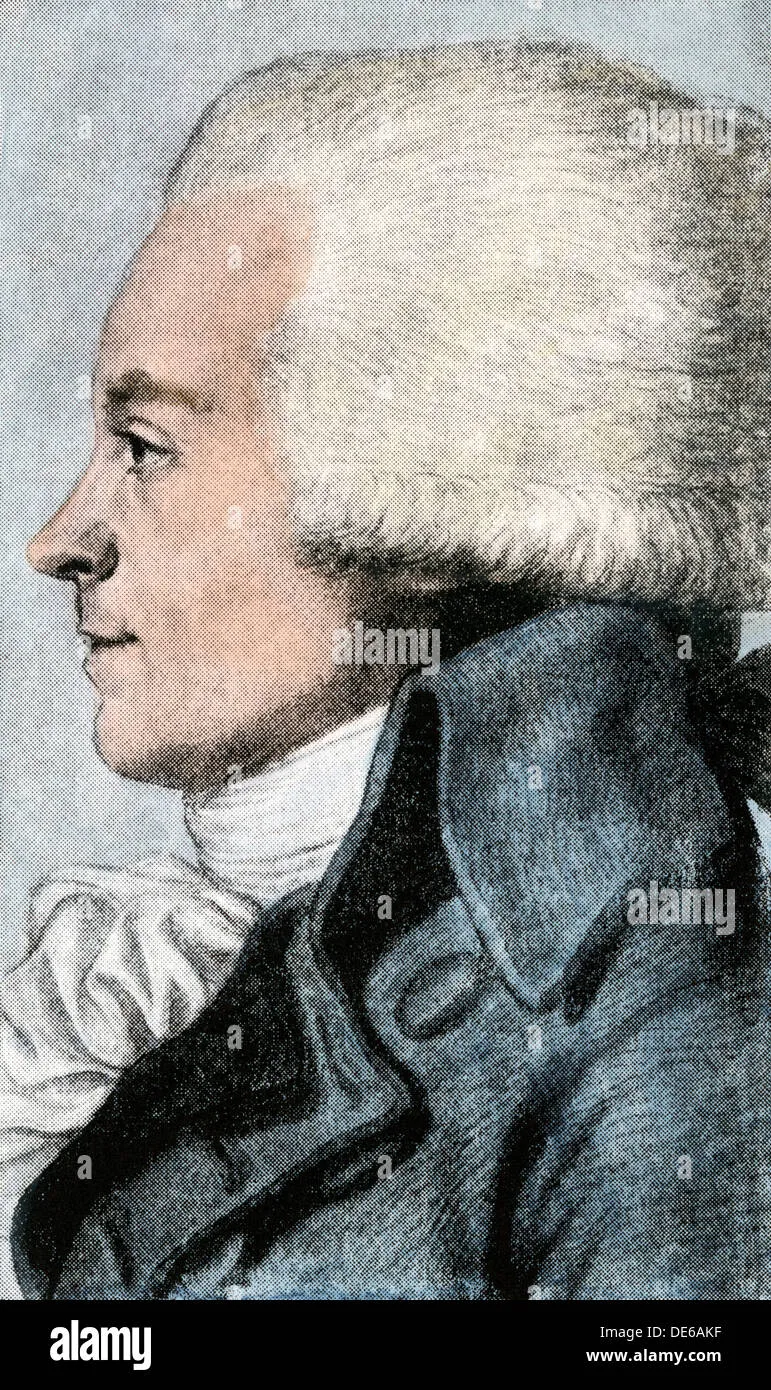 Photo: Maximilien Robespierre, via c8.alamy.com
The revolutionary tribunal processed cases with assembly-line efficiency. Accusations multiplied faster than investigations could resolve them. Denunciations became a civic duty, and the failure to denounce became grounds for suspicion. Within months, the revolution was devouring its own children with mechanical precision.
Robespierre himself articulated the trap with chilling clarity: "The government of the revolution is liberty's despotism against tyranny." This wasn't hypocrisy—it was the logical conclusion of a system that defined virtue as the elimination of vice. If the goal was perfect revolutionary purity, then any deviation from absolute loyalty constituted treason. The more successful the purge, the more paranoid its architects became about remaining impurities.
The end came with mathematical inevitability. By 1794, Robespierre's closest allies recognized that their own survival required his elimination. The man who had orchestrated thousands of executions found himself facing the same revolutionary justice he had perfected. His final speech to the Convention, interrupted by shouts of "Down with the tyrant!" came from the same deputies who had previously cheered his denunciations of others.
The Soviet Perfection
Joseph Stalin refined the French model with industrial efficiency. The Great Purge of 1936-1938 demonstrated how terror campaigns scale when backed by modern bureaucracy and communications technology. What made Stalin's purges particularly instructive was their systematic nature—they followed explicit quotas, targeted specific categories, and generated detailed records that allow historians to trace the progression with scientific precision.
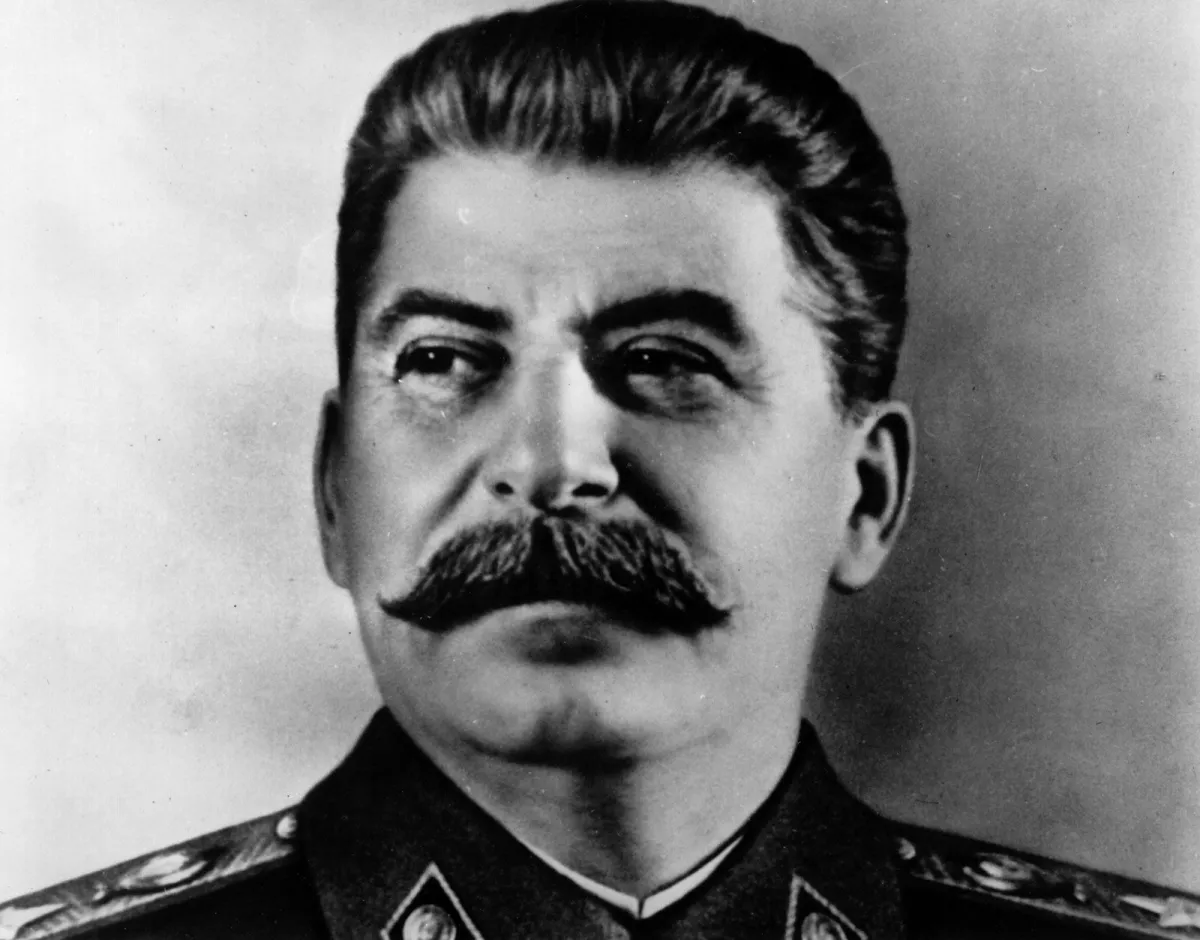 Photo: Joseph Stalin, via cdn.britannica.com
The purges began with obvious targets: former Trotskyists, old Bolsheviks with independent power bases, military commanders with personal loyalty networks. These eliminations served rational political purposes—consolidating Stalin's authority and removing potential rivals. But the apparatus created to identify these threats developed its own momentum and appetite.
NKVD officers faced pressure to uncover conspiracies whether they existed or not. Regional party secretaries competed to demonstrate their revolutionary vigilance by exceeding their arrest quotas. Ordinary citizens learned that survival required not just avoiding suspicion but actively generating it about others. The system rewarded paranoia and punished restraint.
By 1937, the purges were consuming their own architects. Genrikh Yagoda, who had orchestrated the early phases, was arrested and executed for allegedly protecting enemies of the state. His successor, Nikolai Yezhov, met the same fate within two years. The very efficiency with which they had eliminated others became evidence of their own treasonous competence.
Stalin finally ended the terror not from mercy but from necessity. The purges had begun eliminating people faster than the system could replace them. Military units lacked experienced officers, industrial plants couldn't find qualified managers, and the NKVD itself was running out of experienced interrogators. Terror had become economically unsustainable.
The American Version
McCarthyism demonstrated that democratic societies aren't immune to the same dynamics, though institutional constraints limit the damage. Senator Joseph McCarthy's anti-communist crusade followed the familiar pattern: it began with legitimate security concerns, escalated through increasingly broad definitions of disloyalty, and ultimately consumed its own leadership.
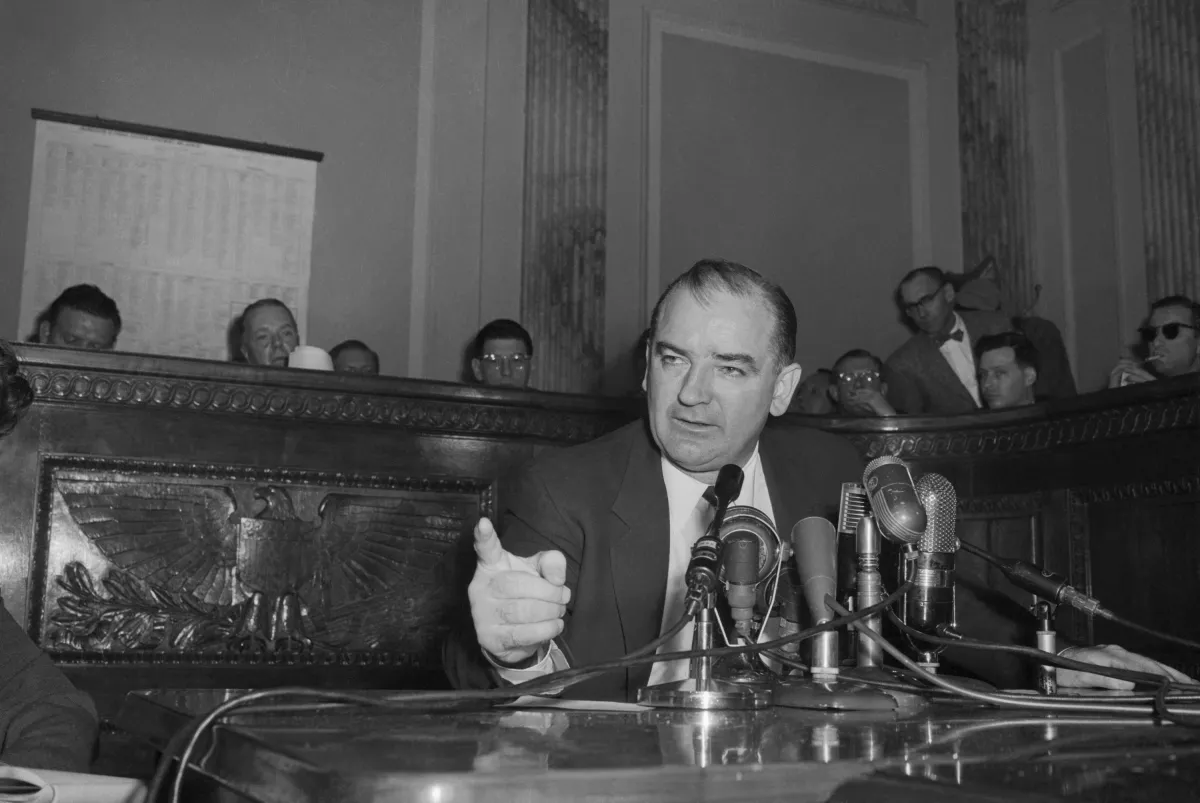 Photo: Joseph McCarthy, via www.thoughtco.com
The progression was slower and less deadly than European examples, but the logic remained identical. Initial investigations targeted actual Communist Party members and Soviet agents—people whose loyalties genuinely conflicted with American interests. But success bred appetite for greater success. Soon, past association with left-wing causes became evidence of current disloyalty. Attending a peace rally in 1938 became grounds for dismissal in 1952.
The House Un-American Activities Committee and Senate investigations created a vast machinery for processing accusations. Hollywood blacklists, State Department purges, and university loyalty oaths institutionalized suspicion. The system rewarded those who could identify new threats and punished those who questioned the process.
McCarthy's downfall came when he applied his methods to the U.S. Army—an institution with sufficient institutional strength to resist. The Army-McCarthy hearings of 1954 exposed the senator's tactics to sustained public scrutiny. His question "Have you no sense of decency?" became the moment when the hunter became the hunted. Within three years, McCarthy was censured, isolated, and dead from alcoholism.
The Mathematical Inevitability
What makes political terror campaigns self-destructive isn't moral justice but mathematical necessity. Terror operates by constantly expanding its definition of threat. This expansion serves multiple functions: it justifies the apparatus's continued existence, provides new targets when obvious enemies are exhausted, and demonstrates the system's revolutionary purity.
But expansion creates its own problems. Each new category of enemies brings the purge closer to the center of power. Each broader definition of disloyalty increases the probability that the purgers themselves will eventually qualify as targets. The very thoroughness that makes terror effective makes it ultimately suicidal.
The process follows a predictable trajectory. First, eliminate obvious enemies—those whose guilt is genuine and whose removal serves clear political purposes. Second, expand definitions to include potential threats—those whose past actions or current positions might pose future dangers. Third, pursue ideological purity by targeting insufficient enthusiasm—those whose loyalty is technically correct but emotionally inadequate.
By the third phase, the terror has created more enemies than it eliminates. Every victim has family, friends, and colleagues who now harbor grievances against the system. Every denunciation creates new suspects among those who failed to denounce quickly enough. Every confession implicates new conspirators who must be investigated.
The Modern Echo
Contemporary cancel culture follows remarkably similar patterns, though with social rather than physical destruction. The progression from obvious wrongdoing to ideological deviation to insufficient enthusiasm mirrors historical purges with uncanny precision. The main difference lies in the distributed nature of modern enforcement—no central committee coordinates the process, yet it follows the same mathematical logic.
Social media amplifies the dynamics that drove historical terror campaigns. Accusations spread faster than investigations, denunciations become viral content, and the failure to participate in collective outrage becomes grounds for suspicion. The platform algorithms that reward engagement naturally favor content that generates strong emotional reactions—particularly outrage and fear.
The self-consuming element appears in the regular spectacle of yesterday's enforcers becoming today's targets. Activists who built their careers on exposing others' problematic statements find themselves subjected to the same scrutiny. Journalists who perfected the art of public shaming discover that their own past writings don't meet current standards.
The Limits of Fear
Political terror fails for the same reason it initially succeeds: it's too effective. Fear motivates compliance in the short term but generates resentment over time. The apparatus created to eliminate threats becomes the primary threat. The cure becomes worse than the disease.
History suggests no method for controlling terror once unleashed—only conditions that make it more or less likely to consume its creators. Strong institutions can limit the damage, as they did in McCarthy's America. Exhaustion eventually sets in when the costs exceed the benefits. But the pattern itself appears immune to human learning.
The hunters become the hunted because that's what hunters do—they hunt. When obvious prey becomes scarce, they expand their definition of legitimate targets. When external enemies are eliminated, they discover internal ones. When the revolution achieves victory, it must find new enemies to justify its continued existence.
The mathematics are inexorable: every purge creates the conditions for the next purge, until the system either collapses from exhaustion or finds someone strong enough to call off the hunt. But by then, the hunters have usually become the hunted themselves.