The Merchant in the Middle: Five Millennia of Manufactured Resentment

In medieval European cities, Jewish merchants occupied a peculiar position. Barred from most professions by guild restrictions and religious law, they were permitted—even encouraged—to engage in money lending, a practice forbidden to Christians. This arrangement served everyone's interests: Christians could access capital while maintaining religious purity, Jewish communities could achieve economic stability, and rulers could tax this prosperity while maintaining plausible distance from usury.
Until the arrangement stopped serving everyone's interests. When economic hardship struck, when crops failed, when wars demanded financing, the same rulers who had structured this system found it convenient to redirect popular anger toward the visible prosperity they had carefully cultivated. The debt could be canceled, the assets seized, and the population's frustration channeled away from the policies that had created their hardship.
This pattern—permit success, harvest resentment, deploy violence—represents one of history's most persistent political technologies. The specific minority changes, the underlying mechanics do not.
The Architecture of Useful Enemies
Effective scapegoating requires careful construction. The target group must be simultaneously successful enough to generate envy and vulnerable enough to be safely attacked. They must be visible in their prosperity but limited in their political power. Most crucially, they must be positioned as intermediaries between the ruling class and the general population—close enough to the levers of power to seem complicit, distant enough to be expendable.
The Chinese merchants of Southeast Asia exemplify this dynamic perfectly. Colonial authorities and post-independence governments alike found Chinese business communities invaluable for economic development. Their commercial networks, cultural emphasis on education, and willingness to work within existing power structures made them ideal intermediaries for extracting value from local populations.
This success was both genuine and carefully circumscribed. Chinese communities prospered within limits set by political authorities who could revoke their privileges at any time. They became wealthy enough to fund development projects and government initiatives, visible enough to serve as symbols of economic inequality, and foreign enough to be blamed for problems they didn't create.
When Indonesia's economy stagnated in the 1960s, when Malaysia needed to explain persistent poverty despite rapid growth, when Thailand faced financial crisis in the 1990s, the same pattern emerged. The Chinese minority that had been celebrated as entrepreneurial and hardworking suddenly became greedy and exploitative. Their success, previously seen as evidence of the system's fairness, became proof of its corruption.
The Soviet Innovation
The Soviet Union refined this ancient technology with characteristic thoroughness. The kulaks—prosperous peasants who had succeeded under the New Economic Policy—were systematically cultivated as symbols of rural capitalism, then destroyed when Stalin needed to explain agricultural failures and justify collectivization.
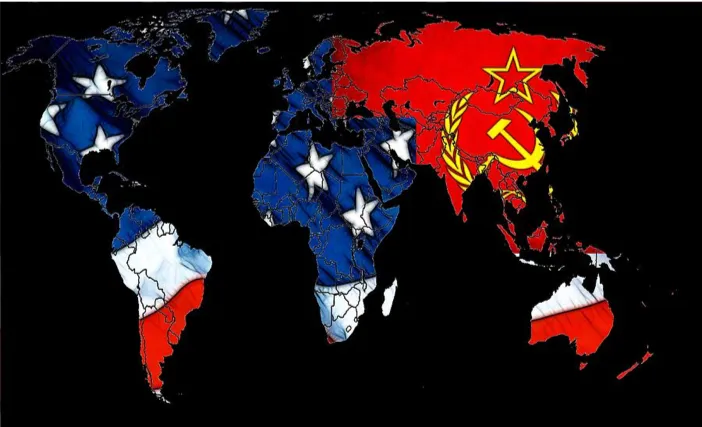 Photo: Soviet Union, via o.quizlet.com
The brilliance of the kulak campaign lay in its definitional flexibility. "Kulak" could mean anyone who owned enough property to generate resentment among poorer neighbors, anyone who resisted collectivization, or anyone who needed to be eliminated for other reasons. The category expanded and contracted based on political necessity rather than economic reality.
This flexibility made the kulaks perfect scapegoats. Their prosperity was real enough to justify popular anger, but their definition was fluid enough to include anyone inconvenient to the regime. When collectivization produced famine, when agricultural quotas couldn't be met, when rural populations resisted party control, the solution was always the same: find more kulaks.
The campaign succeeded because it channeled genuine grievances—rural inequality, economic uncertainty, social disruption—toward targets that couldn't threaten the system itself. Destroying kulaks didn't address the structural problems of Soviet agriculture, but it did provide psychologically satisfying explanations for those problems.
The Rwandan Perfection
Rwanda's genocide represents the ultimate refinement of manufactured resentment. The Hutu-Tutsi distinction, originally fluid and largely economic, was hardened into racial categories by colonial administrators who needed clear hierarchies for indirect rule. The Belgians favored Tutsis for education and administrative positions, creating a visible minority that prospered within the colonial system.
When independence approached and democratic politics began, Hutu politicians discovered the electoral utility of resentment toward Tutsi privilege. The minority that had been elevated by colonial policy became the explanation for all of colonialism's injustices. Their success in education, government, and business—originally encouraged by the same authorities now promoting democracy—became evidence of their illegitimate dominance.
The genius of this framing was its simplicity. Complex historical processes—colonialism, economic development, social change—were reduced to a simple narrative: one group had stolen opportunities that rightfully belonged to another. The solution was equally simple: remove the thieves and reclaim what was stolen.
This narrative's power lay in its partial truth. Tutsis had indeed benefited from colonial policies that disadvantaged Hutus. They did hold disproportionate positions in education and administration. They were a visible minority whose success contrasted with broader poverty. But these facts were consequences of colonial policy, not causes of Hutu disadvantage.
The American Context
The United States has deployed variations of this pattern throughout its history, though usually with less extreme outcomes. The Chinese Exclusion Act of 1882 followed economic panic that made Chinese workers convenient scapegoats for broader labor market disruptions. Japanese internment during World War II targeted a prosperous minority whose success had generated resentment during the Depression.
More recently, the 2008 financial crisis produced familiar dynamics around Wall Street executives and financial professionals. The visible wealth of investment bankers became a lightning rod for anger about economic policies that had much broader origins. This resentment was genuine and understandable, but it was also carefully channeled toward individuals rather than institutions, toward symptoms rather than causes.
The pattern persists because it works. Directing popular anger toward visible minorities relieves pressure on political systems while avoiding the difficult work of addressing structural problems. It's easier to blame successful immigrants for economic inequality than to examine immigration policies. It's simpler to attack financial professionals for market instability than to reform financial regulation.
The Eternal Cycle
This pattern repeats because it serves the psychological needs of both rulers and ruled. For political authorities, manufactured resentment provides a pressure valve that directs anger away from policy failures. For populations experiencing genuine hardship, it offers simple explanations for complex problems and clear targets for justified anger.
The tragedy is that this dynamic destroys exactly the communities that make societies function. The Jewish merchants who financed medieval commerce, the Chinese entrepreneurs who drove Southeast Asian development, the kulaks who fed Soviet cities, the Tutsis who staffed Rwandan institutions—all were eliminated precisely because they were useful, not despite it.
Recognizing this pattern doesn't prevent it, but it does suggest questions worth asking when political movements begin targeting successful minorities. Who benefits from this resentment? What problems does it solve, and what problems does it obscure? Most importantly: when the scapegoats are gone, will the underlying issues that created popular anger still remain?
History suggests the answer to that last question is always yes. The merchant in the middle disappears, but the forces that put them there—and the politicians who benefit from their destruction—remain unchanged. The cycle begins again with the next convenient minority, the next useful enemy, the next group that succeeds just enough to be worth destroying.