The Price of Peace: Why Societies That Choose to Forget Always Remember at the Worst Possible Moment

Human psychology operates on a principle that political scientists consistently underestimate: the wounds we agree to ignore in the name of peace never actually heal. They merely migrate to a different generation, where they manifest with compound interest and perfect timing to destabilize whatever stability the original amnesty was meant to preserve.
The Arithmetic of Forgiveness
Every post-conflict society faces identical mathematics. Prosecute the perpetrators and risk triggering the very violence the peace process was designed to end. Grant amnesty and guarantee that someone, somewhere, will eventually weaponize those unresolved grievances when political circumstances make revenge profitable.
The Confederate amnesty following the Civil War demonstrates this pattern with surgical precision. Lincoln's assassination eliminated the possibility of his more moderate Reconstruction approach, but even under Johnson's lenient policies, the fundamental arithmetic remained unchanged. Grant amnesty to Confederate leadership and watch them immediately begin laying the groundwork for what would become Jim Crow. Prosecute them and risk reigniting a war the Union had barely managed to win the first time.
Andrew Johnson chose amnesty. The result was not peace, but a different kind of war—one that lasted another century and created the racial dynamics that continue to destabilize American politics today. The grievances that Reconstruction was designed to resolve simply transformed into different institutional forms and waited for more favorable political conditions.
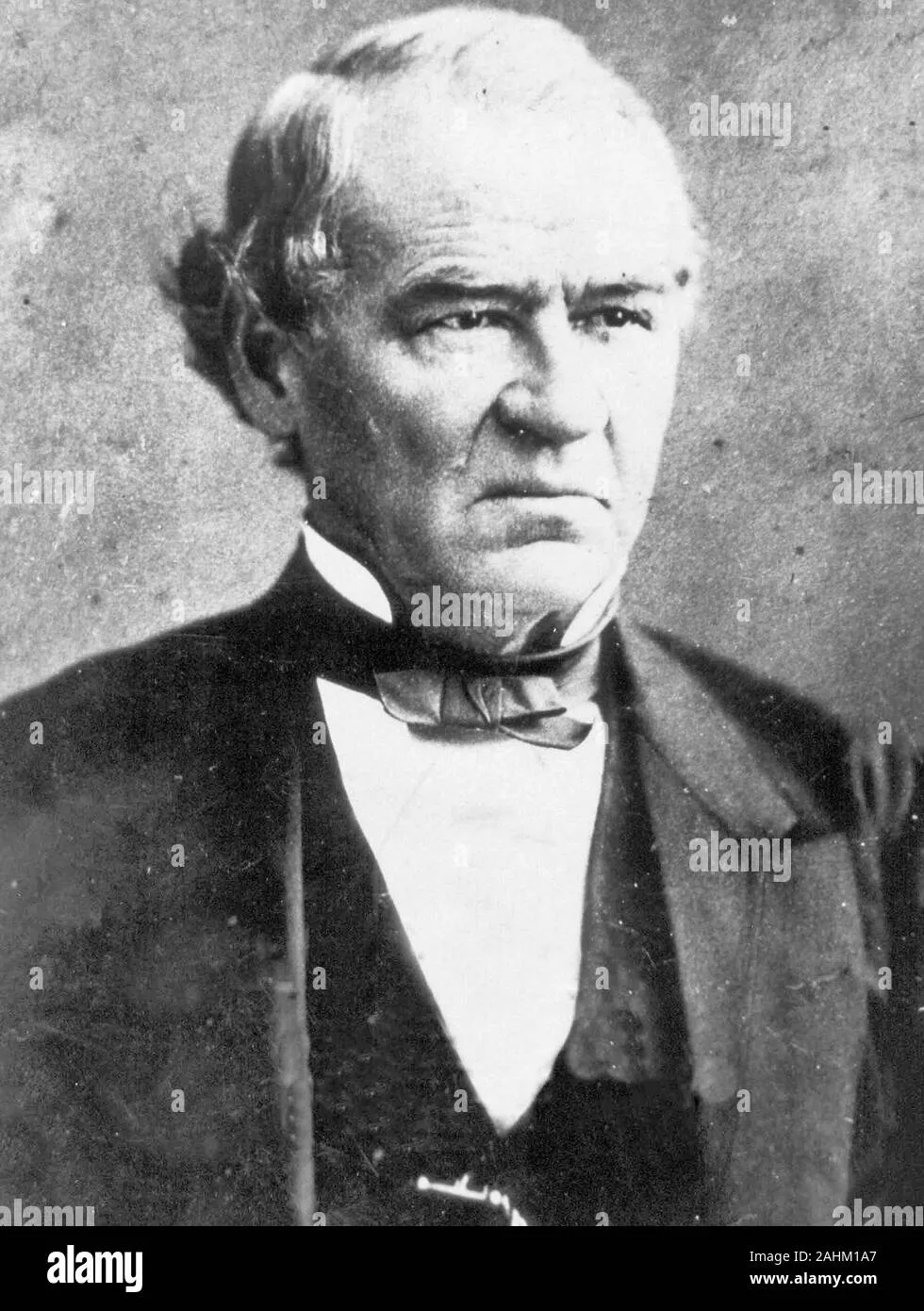 Photo: Andrew Johnson, via c8.alamy.com
The South African Exception That Proves the Rule
South Africa's Truth and Reconciliation Commission represents the most sophisticated attempt in recorded history to navigate the amnesty trap through institutional innovation. Rather than choosing between justice and peace, the TRC attempted to create a third option: acknowledgment without punishment, truth without vengeance.
 Photo: South Africa, via image.shutterstock.com
The commission's immediate results appeared to validate this approach. South Africa avoided the racial civil war that virtually every expert predicted. The transition to majority rule proceeded without the economic collapse or mass emigration that had characterized similar transitions elsewhere in Africa.
Yet even this apparent success reveals the deeper psychological patterns that make the amnesty trap inescapable. The TRC succeeded in managing the transition, but it could not eliminate the underlying grievances. Twenty-five years later, South African politics increasingly revolve around the same racial and economic divisions that the TRC was designed to resolve. The difference is that these grievances now operate within democratic institutions rather than apartheid ones—making them more legitimate but no less destabilizing.
The Argentine Model: Justice Delayed, Democracy Preserved
Argentina's approach to post-junta accountability demonstrates the alternative path and its own inevitable complications. Rather than immediate amnesty, Argentina initially chose prosecution, then amnesty, then renewed prosecution as political circumstances changed.
The military junta that ruled from 1976 to 1983 killed an estimated 30,000 people. When democracy returned, President Raúl Alfonsín initially pursued prosecutions of military leadership. The military responded with coup attempts and ongoing threats that made governance nearly impossible. Alfonsín's successor, Carlos Menem, granted comprehensive amnesty in 1990.
For a decade, this approach appeared successful. Argentina achieved political stability, economic growth, and international rehabilitation. The amnesty seemed to have worked exactly as intended.
Then, in 2003, newly elected President Néstor Kirchner reopened the prosecutions. The political calculation had changed: the military was weaker, civil society was stronger, and electoral advantage could be gained by revisiting the past. The result was not renewed conflict, but a different kind of political instability as Argentina spent the next two decades relitigating events from the 1970s while contemporary problems accumulated.
The Generational Transfer Mechanism
The consistent pattern across cultures and centuries reveals a fundamental aspect of human psychology that political arrangements cannot overcome. Societies can choose not to pursue justice, but they cannot choose not to remember injustice. What they can do is transfer the burden of that memory to the next generation, where it operates according to different political incentives.
Spain's "Pact of Forgetting" following Franco's death in 1975 created forty years of political stability by agreeing to ignore the crimes of the Franco regime. This approach worked precisely as intended—until it didn't. The 2007 Historical Memory Law represented Spain's decision to abandon the pact and begin prosecuting Franco-era crimes, thirty years after the transition to democracy.
The timing was not coincidental. The generation that negotiated the original pact was dying off, replaced by Spaniards who had not lived through the civil war and therefore felt no personal investment in the bargain their grandparents had made. For them, the pact looked less like necessary pragmatism and more like cowardly collaboration.
The American Recurrence
The United States provides the longest-running case study of how amnesty politics evolve across multiple generations. The pattern established during Reconstruction has repeated with mechanical precision every thirty to forty years since.
The Hayes Compromise of 1877 ended Reconstruction in exchange for Republican control of the presidency. This created the political space for Jim Crow, which lasted until the Civil Rights Movement of the 1950s and 1960s. The Civil Rights Movement achieved legal equality but avoided economic redistribution—creating the conditions for the backlash politics of the 1980s and 1990s. That backlash was eventually contained through a combination of economic prosperity and demographic change, setting the stage for the racial polarization that has defined American politics since 2008.
Each generation believed it was finally resolving the issues previous generations had failed to address. Each generation discovered that the fundamental arithmetic of racial grievance in America remained unchanged: acknowledge it and risk political instability, ignore it and guarantee that it will resurface when political conditions make racial appeals profitable.
The Technology of Remembering
Modern information technology has fundamentally altered the dynamics of collective memory without changing the underlying psychological patterns. Previous generations could choose amnesty with some confidence that evidence of past crimes would gradually disappear as witnesses died and documents deteriorated. Contemporary societies make that choice knowing that digital records are essentially permanent and that future generations will have unprecedented access to evidence of what their predecessors chose to ignore.
This creates a new form of the amnesty trap. Societies can still choose not to prosecute, but they can no longer choose not to remember. The evidence remains available for future political entrepreneurs to weaponize when circumstances make historical grievances politically profitable.
The Institutional Memory Paradox
The most sophisticated attempts to navigate the amnesty trap—truth commissions, transitional justice mechanisms, institutional reforms—consistently produce the same unintended consequence. By creating formal processes for acknowledging past crimes, they also create institutional frameworks for remembering those crimes indefinitely.
The TRC's detailed records of apartheid-era crimes now provide a comprehensive database for contemporary South African politicians seeking to mobilize racial grievances. Argentina's human rights trials created legal precedents that make future prosecutions easier to initiate. Spain's Historical Memory Law established bureaucratic mechanisms for investigating Franco-era crimes that operate independently of the political consensus that created them.
Every institutional solution to the amnesty trap creates new institutions that have organizational incentives to keep historical grievances alive. The choice is not between remembering and forgetting, but between different forms of institutional memory and the political uses to which that memory will inevitably be put.
Five thousand years of recorded attempts to balance justice and peace reveal a consistent pattern: societies that choose amnesty postpone conflict rather than preventing it, while societies that choose prosecution often discover that justice is easier to demand than to achieve. The amnesty trap is not a policy problem with a technical solution, but a reflection of human psychology that no institutional arrangement has yet managed to overcome.