The Prosecutor's Dilemma: Why Every New Government Must Choose Between Justice and Survival
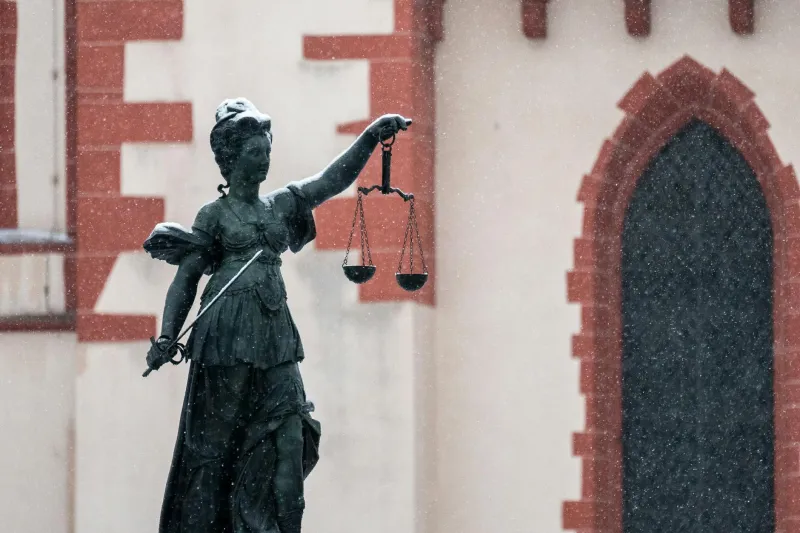
The Prosecutor's Dilemma: Why Every New Government Must Choose Between Justice and Survival
Every revolution faces the same morning-after problem: what do you do with yesterday's villains? The question has haunted political transitions for millennia, from ancient Rome to modern South Africa. Pursue justice too aggressively, and you risk triggering a counter-revolution. Show too much mercy, and you establish that power grants immunity from consequences.
 Photo: South Africa, via media.nomadicmatt.com
The dilemma cuts deeper than most democratic theorists acknowledge. It's not just about balancing competing moral claims or managing political coalitions. It's about whether new governments can survive their own principles — and whether societies can build stable institutions on foundations of selective amnesia.
The Ancient Template
The pattern appears wherever regimes change hands. Augustus faced it after defeating Mark Antony: execute the remaining Republicans and confirm that politics is warfare by other means, or show clemency and risk appearing weak to both supporters and enemies. His solution — strategic pardons combined with selective prosecutions — became the template that every subsequent transition would modify but never escape.
The psychology hasn't changed since Caesar crossed the Rubicon. Those who backed the losing side need reassurance that they won't face retribution. Those who supported the winners demand that their sacrifices be acknowledged through punishment of their former oppressors. The new leadership must satisfy both groups while establishing their own legitimacy — a mathematical impossibility that somehow must be solved.
Modern transitions face the same impossible arithmetic. Nelson Mandela understood that prosecuting apartheid's architects might trigger a white exodus that would cripple South Africa's economy. But pardoning them entirely would tell black South Africans that their suffering counted for nothing. The Truth and Reconciliation Commission emerged as a third way: confession in exchange for amnesty, public acknowledgment instead of criminal punishment.
 Photo: Nelson Mandela, via www.artfactory.in
The Spanish Gamble
Post-Franco Spain chose a different path: deliberate forgetting. The 1977 Amnesty Law didn't just pardon political prisoners; it granted immunity to Franco's enforcers and collaborators. The transition to democracy succeeded precisely because everyone agreed to pretend the previous forty years hadn't happened.
The Spanish model influenced transitions across Latin America and Eastern Europe. Argentina initially tried the same approach, pardoning the junta leaders responsible for the "Dirty War." But the policy proved politically unsustainable — public pressure eventually forced prosecutions that continue today, decades after the transition.
The contrasting outcomes reveal something crucial about democratic consolidation. Spain's amnesty worked because it was mutual: both sides agreed to forget. Argentina's failed because it was unilateral: only one side was asked to forgive and forget.
The American Exception
The United States offers history's most instructive case study in transitional justice — or the lack thereof. After the Civil War, the choice between prosecution and reconciliation split along predictable lines. Radical Republicans demanded trials for Confederate leaders, arguing that treason without consequences would normalize political violence. Moderate Republicans and Democrats favored amnesty, claiming that prosecutions would make reunion impossible.
Lincoln's assassination resolved the debate in the worst possible way. Andrew Johnson's blanket pardons satisfied neither justice nor reconciliation. Confederate leaders escaped punishment while maintaining their belief in the righteousness of their cause. The failure to establish clear consequences for rebellion against democratic institutions would echo through American politics for the next century and a half.
The pattern repeated after Watergate, Iran-Contra, and other constitutional crises. Each time, the choice between prosecution and "moving forward" was framed as a choice between vengeance and healing. Each time, the decision to prioritize political stability over legal accountability established precedents that would complicate future transitions.
The Dictator's Insurance Policy
Modern autocrats have learned to game the amnesty trap. They understand that democratic transitions create pressure for reconciliation, and they structure their exits accordingly. Pinochet's carefully negotiated departure included constitutional provisions protecting former officials from prosecution. Putin's arrangement with Yeltsin included explicit immunity guarantees. Even smaller-scale transitions — governors facing corruption charges, mayors caught in scandals — often involve similar calculations.
The result is a perverse incentive structure where those who abuse power most flagrantly are most likely to escape consequences. Democratic reformers, constrained by their own principles and the need for stable transitions, find themselves protecting the very people they sought to replace.
This dynamic explains why so many transitions produce incomplete democracies. The institutions change, but the people running them remain largely the same. Old networks persist under new labels. Corruption becomes bipartisan. The promise of democratic accountability gets sacrificed on the altar of democratic stability.
The Price of Impunity
What does five thousand years of data reveal about which approach actually works? The evidence suggests that neither pure justice nor complete amnesty produces optimal outcomes. Societies that prosecute too aggressively often trigger backlash that destabilizes democratic institutions. But societies that grant blanket immunity establish that power provides protection from consequences — a precedent that corrupts future governance.
The most successful transitions seem to follow a middle path: selective prosecutions targeting the worst offenders, combined with institutional reforms that prevent future abuses. Truth commissions, lustration policies, and constitutional changes can provide accountability without destabilizing revenge cycles.
But even this moderate approach requires something that many transitional societies lack: broad consensus about what constitutes legitimate political behavior. Without shared norms about the acceptable use of power, every prosecution looks like political revenge, and every amnesty looks like elite impunity.
Democracy's Unresolved Contradiction
The amnesty trap reveals a fundamental tension in democratic theory. Democracy promises equal treatment under law, but democratic transitions routinely require unequal treatment to succeed. The very people who violated democratic norms must be handled carefully to protect the democratic institutions they undermined.
This contradiction helps explain why so many democracies struggle with corruption, authoritarianism, and political violence. The precedents established during transitions — who gets prosecuted, who gets pardoned, which crimes count as unforgivable — shape political behavior for generations.
American democracy's current stress reflects, in part, the accumulated weight of these unresolved contradictions. A political system that has repeatedly chosen stability over accountability now faces actors who assume that power provides immunity from consequences. The amnesty trap, it turns out, doesn't just threaten new democracies. It can destabilize old ones too.