Democracy's Missing Manual: How One Island Nation Taught the World to Lose Elections Without Losing Everything
Democracy's Missing Manual: How One Island Nation Taught the World to Lose Elections Without Losing Everything
Every democracy faces the same fundamental problem: what do you do with the people who just lost? The question sounds simple until you realize that for most of human history, losing political power meant exile, imprisonment, or death. The winner-take-all logic of tribal warfare doesn't naturally evolve into the give-and-take of parliamentary debate.
Yet somehow, on a small island off the coast of Europe, politicians stumbled into something unprecedented: they invented a way to lose gracefully. More than that, they made losing into an art form, complete with official titles, government salaries, and constitutional responsibilities. They called it "Her Majesty's Most Loyal Opposition," and it may be the most important political innovation nobody talks about.
The Accident That Saved Democracy
The British didn't set out to solve democracy's core dilemma. Like most constitutional arrangements, the loyal opposition emerged from a series of practical compromises that hardened into sacred tradition. By the 18th century, Parliament had evolved into a system where the monarch's ministers faced regular questioning from other members. When those ministers lost support, they stepped down — but crucially, they didn't disappear.
Instead, they formed what became known as "the Opposition," sitting literally across from the government benches in the House of Commons. The physical architecture mattered: unlike the semicircular chambers that most democracies later adopted, Westminster's rectangular layout created a clear us-versus-them dynamic while keeping everyone in the same room.
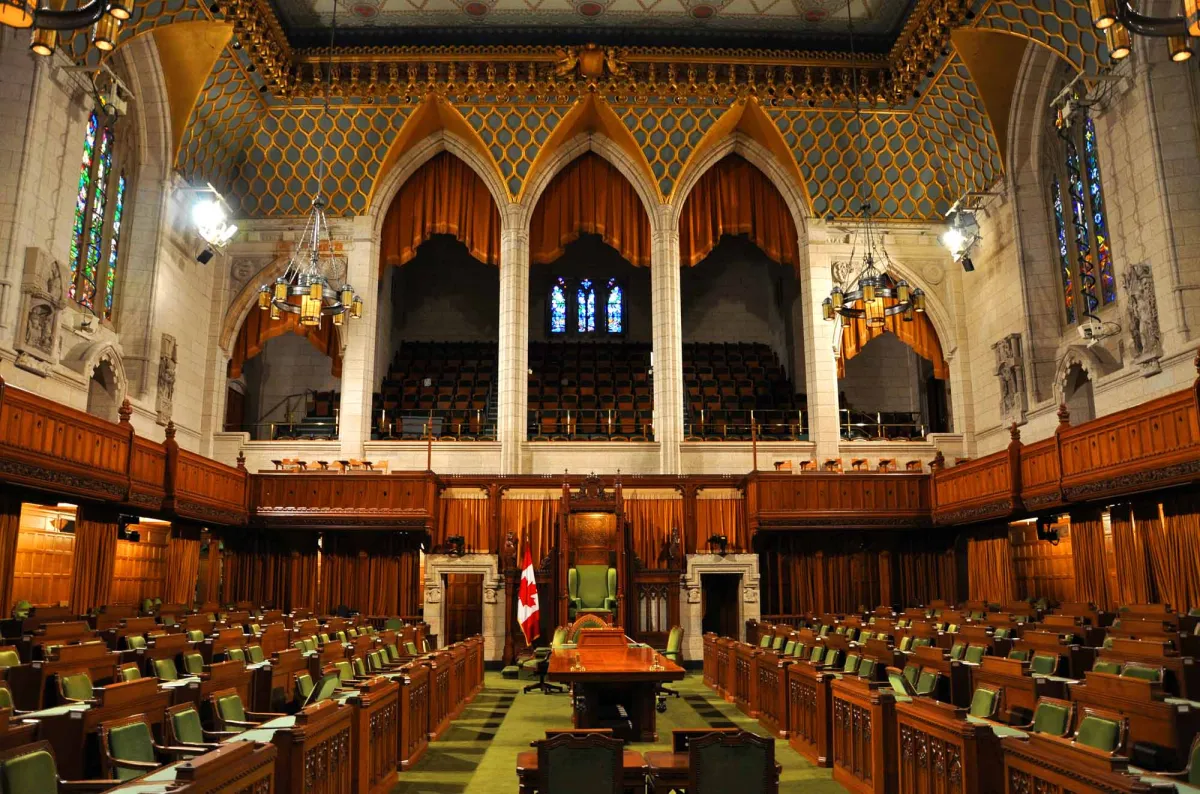 Photo: House of Commons, via d3d0lqu00lnqvz.cloudfront.net
The genius wasn't in the seating arrangement. It was in the expectation that followed: the Opposition had a job to do. Not just any job, but a specific, constitutionally recognized role as the government's official critic. They received public funding to staff their offices and research their attacks. They got guaranteed time to respond to government proposals. Most remarkably, their leader received an official salary — paid by the same treasury they spent their days denouncing.
The Psychology of Institutionalized Dissent
Human psychology hasn't changed in five thousand years. The impulse to crush your enemies remains as strong today as it was when Hammurabi carved his laws into stone. What Britain accidentally discovered was a way to channel that impulse into something productive.
The loyal opposition works because it gives defeated politicians something to do besides plot revolution. Instead of nursing grievances in exile or gathering armies in the provinces, they get to stand up every Wednesday and publicly humiliate the Prime Minister during Question Time. The ritual serves multiple psychological functions: it provides an outlet for the losers' frustration, entertainment for the public, and a regular reminder to the winners that their position remains temporary.
More importantly, it creates what behavioral economists call "exit options." When political actors know they can return to power through elections rather than coups, they invest in democratic institutions rather than private armies. The Opposition doesn't just criticize the government; it advertises itself as the government-in-waiting.
What Happens When the Manual Goes Missing
Most democracies never developed this norm, and the results speak for themselves. In systems without institutionalized opposition, losing parties face a stark choice: permanent marginalization or extra-legal resistance. The middle ground — legitimate, organized, publicly funded criticism — simply doesn't exist.
Consider the American system, where losing presidential candidates traditionally disappear from public view until the next campaign cycle. The absence of a formal opposition role means that criticism of the executive comes from a fragmented collection of congressional minorities, interest groups, and media figures. None carries the institutional weight of a shadow government preparing to take power.
Or look at newer democracies where opposition parties regularly boycott elections, refuse to recognize results, or retreat into permanent protest mode. Without established norms for how to lose, democracy becomes a zero-sum game where every election threatens the system's survival.
The Fragility of Graceful Defeat
Even in Britain, the loyal opposition remains more fragile than it appears. The tradition depends on both sides accepting certain unwritten rules: the government must provide the opposition with information and access, while the opposition must limit its criticism to policy rather than legitimacy. When either side breaks these informal agreements, the system breaks down.
Recent years have tested these boundaries. Brexit revealed how quickly "loyal" opposition can become "resistance" when fundamental constitutional questions arise. The Scottish independence movement has created a party that explicitly rejects the legitimacy of Westminster itself. Even within traditional parties, the rise of ideological politics has made the old conventions feel increasingly quaint.
The American experience offers a preview of what happens when the norms collapse entirely. As political polarization has intensified, the informal traditions that once governed transitions of power — gracious concession speeches, cooperative briefings, peaceful inaugurations — have given way to legal challenges, administrative resistance, and questions about electoral legitimacy.
The Future of Losing
Democracy's survival depends on solving a problem that most democratic theorists ignore: how do you make losing tolerable enough that the losers don't try to break the game? The British accidentally stumbled onto one answer, but it's an answer that requires constant maintenance and cultural reinforcement.
The loyal opposition works because it transforms defeat from a catastrophe into an opportunity. It gives losing politicians a platform, a paycheck, and a path back to power. Most importantly, it gives them a role in the democratic process that doesn't require winning elections.
As democracies around the world face increasing polarization and institutional stress, they might want to study Britain's accidental masterpiece. Because in the end, democracy isn't really about how you win elections. It's about how you lose them.