The Paper Shield: How History's Most Effective Resistance Wore Suits, Not Uniforms

The Paper Shield: How History's Most Effective Resistance Wore Suits, Not Uniforms
The human capacity for resistance reveals itself most clearly not in moments of dramatic defiance, but in the accumulated weight of a thousand small refusals. While popular imagination celebrates the lone hero standing before tanks, five millennia of recorded governance suggest that power's most persistent enemy has always been the clerk who insists on following procedure.
The Bureaucrat's Ancient Arsenal
In 522 BCE, as Darius I consolidated Persian imperial power, his most formidable opponents were not rival kings or rebel generals, but the administrative class of conquered territories who possessed an intimate knowledge of how to make governance impossible through compliance. They filed reports in the wrong format, scheduled meetings for inconvenient times, and applied regulations with such rigid literalism that imperial directives became exercises in futility.
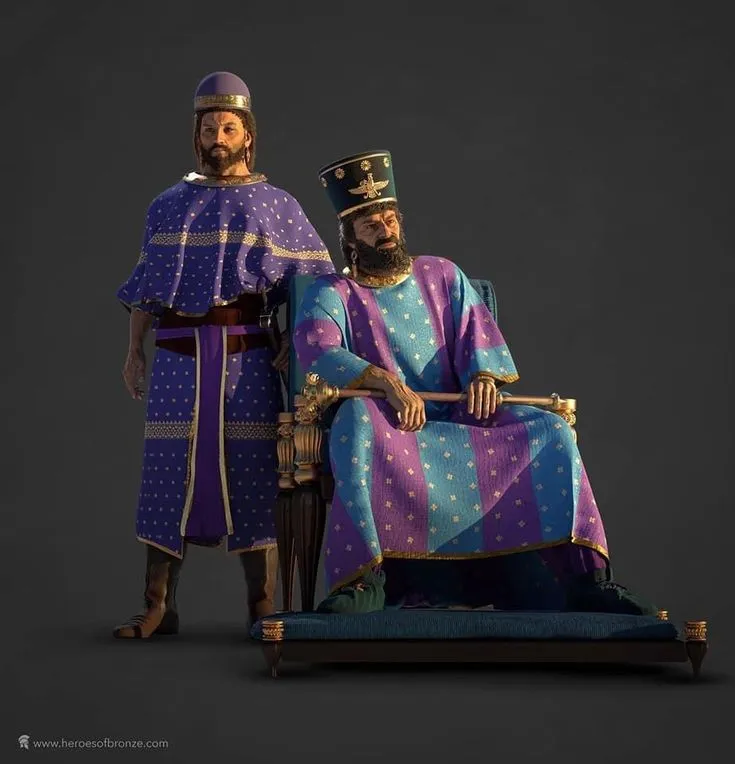 Photo: Darius I, via i.pinimg.com
This pattern has repeated across every civilization that left records detailed enough to examine. The Roman Empire's expansion slowed not primarily due to military resistance, but because local administrators in conquered territories proved remarkably creative in their interpretation of imperial mandates. A tax collection order might be implemented precisely as written—except applied to a census from the previous decade, rendering it effectively meaningless.
The Ottoman Empire's nineteenth-century Tanzimat reforms faced their greatest obstacle not from conservative religious authorities or regional governors, but from the vast network of middle-tier bureaucrats who possessed both the technical knowledge to implement change and the institutional memory to prevent it. They attended reform meetings, took detailed notes, and then somehow never quite managed to translate directives into actual policy.
The Modern Mechanics of Institutional Friction
Vichy France provides perhaps the most documented case study of bureaucratic resistance in the modern era. While the French Resistance captured headlines and inspired films, the most effective protection of French Jews came from civil servants who lost paperwork, miscounted deportation quotas, and discovered previously unknown legal complications that required extensive review.
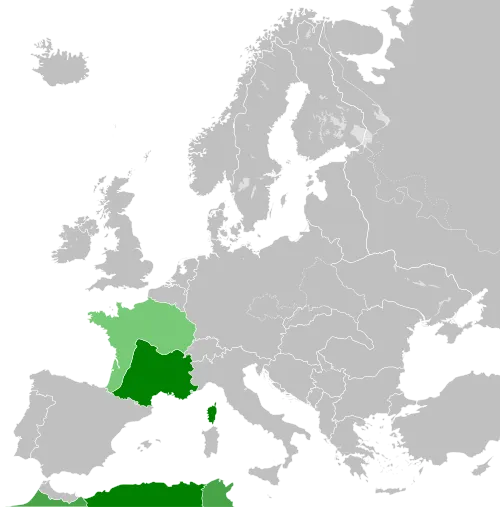 Photo: Vichy France, via upload.wikimedia.org
Prefect Jean Moulin became famous for his dramatic resistance activities, but thousands of unnamed clerks saved more lives by mastering the art of administrative delay. They scheduled deportation trains for dates when rolling stock was mysteriously unavailable, processed identification documents with subtle errors that rendered them invalid, and maintained filing systems so complex that locating specific individuals became practically impossible.
 Photo: Jean Moulin, via files.famousbio.net
The pattern emerged again during the Nixon administration, when career Justice Department attorneys found increasingly creative ways to slow-walk politically motivated prosecutions. They requested additional evidence that didn't exist, discovered procedural requirements that had been overlooked, and applied legal standards with such precision that politically convenient cases collapsed under their own contradictions.
The Psychology of Procedural Resistance
What makes bureaucratic resistance so effective is its reliance on the same psychological principles that make bureaucracy itself function. Humans possess a deep-seated respect for process, even when they disagree with outcomes. An authoritarian leader who orders the arrest of political opponents faces little resistance from security forces. The same leader who orders those arrests processed through normal judicial channels discovers that normal judicial channels possess an almost infinite capacity for discovering complications.
The administrator who refuses a direct order commits an act of obvious defiance that invites immediate retaliation. The administrator who accepts the order but implements it according to existing regulations exploits the system's own complexity as a form of protection. They cannot be accused of insubordination because they are following established procedure. They cannot be bypassed because their specialized knowledge makes them irreplaceable.
The Durability of Institutional Memory
Bureaucratic resistance proves so persistent because it operates through institutional memory rather than individual heroism. When a dramatic resistor is arrested or killed, their resistance dies with them. When a bureaucrat is removed, their replacement inherits the same procedural knowledge and faces the same institutional incentives.
The Chilean military government discovered this principle when it attempted to restructure the country's social security system in the 1970s. Despite controlling all branches of government and facing no organized political opposition, the junta found its reforms consistently undermined by career civil servants who possessed irreplaceable knowledge of existing systems and proved remarkably slow to master new ones.
Similarly, the Trump administration's immigration enforcement efforts repeatedly foundered not on legal challenges or public protests, but on the simple reality that immigration law contains thousands of procedural requirements that career immigration officers knew how to navigate—and how to exploit.
The Invisible Architecture of Accountability
The historical record suggests that durable governance depends less on dramatic checks and balances than on the accumulated friction of institutional process. Constitutions provide the framework, but bureaucracies provide the resistance. A president may fire a Supreme Court justice, but cannot easily replace the institutional knowledge possessed by thousands of career civil servants.
This creates a paradox that every authoritarian leader eventually discovers: the more efficiently they attempt to exercise power, the more they depend on the very institutional machinery they seek to control. They can replace political appointees, but they cannot replace the systems those appointees must navigate.
The Limits of Paper Shields
Bureaucratic resistance possesses obvious limitations. It can slow authoritarian consolidation but rarely prevent it entirely. It can protect individuals but struggles against systematic oppression. Most importantly, it depends on the continued existence of bureaucratic institutions that authoritarian governments eventually learn to bypass or eliminate.
Yet the historical pattern remains remarkably consistent: governments that maintain complex bureaucratic systems retain internal checks on power that prove difficult to eliminate entirely. Those that successfully eliminate bureaucratic complexity often discover they have also eliminated their own capacity for effective governance.
The lesson from five thousand years of recorded administration is both sobering and encouraging. Heroes may inspire movements, but clerks determine outcomes. The most effective resistance to arbitrary power has always come not from the barricades, but from the filing cabinet.