Send Him Away: The Dangerous Miscalculation at the Heart of Political Banishment

The decision to exile rather than execute a political rival has always been presented as an act of mercy. It is, more accurately, an act of miscalculation — one that rulers have committed with extraordinary regularity across every civilization that left records detailed enough to study.
The logic seems sound on its surface. Execution transforms opponents into martyrs, and martyrs are notoriously difficult to govern. Exile, by contrast, removes the body from the political arena while preserving the appearance of restraint. The exiled rival becomes, in theory, a manageable nuisance: geographically isolated, financially diminished, and slowly forgotten by the population that once found them compelling. The theory is elegant. The practice has produced some of history's most consequential comebacks.
Athens and the Invention of Managed Removal
The Athenians, to their credit, tried to systematize the problem. Ostracism — the practice of exiling citizens by popular vote for a period of ten years — was not conceived as punishment. It was conceived as political surgery: a method of removing figures whose influence had grown so substantial that it threatened the balance of democratic life. Citizens scratched names on pottery shards, the votes were counted, and the individual in question was given ten days to leave Attica.
The genius of the Athenian system was that it was temporary and non-punitive. Property was preserved. The exile could return after a decade, theoretically defanged by time and distance. What the Athenians discovered, however, was that the most capable individuals — the ones whose influence made them candidates for ostracism in the first place — had a tendency to use their exile productively. Themistocles, ostracized around 470 BCE after engineering the Greek naval victory at Salamis, eventually ended his days as a Persian governor, having leveraged his exile into an entirely new career in service of Athens's greatest enemy. The Athenians had removed a man they feared and handed him to the people they feared more.
 Photo: Themistocles, via www.therandomvibez.com
The Distance Problem
Every political system that has employed exile has eventually confronted the same structural flaw: distance is not the same as neutralization. The exiled figure retains their relationships, their reputation, and — critically — their grievances. They gain something else as well: freedom from the daily compromises that erode the credibility of those who remain in power. While the ruling faction must govern, negotiate, disappoint, and be seen doing all of these things, the exile sits at a remove, preserved in amber, their image untarnished by the grubby realities of administration.
Napoleon Bonaparte's two exiles illustrate the point with unusual clarity. After his abdication in 1814, the allied powers settled him on Elba — close enough to France that the choice seems, in retrospect, almost willfully naive. Within ten months, Napoleon had returned to the continent, marched on Paris, and resumed control of France without firing a shot. The army that was supposed to stop him joined him instead. The allied powers had kept their dangerous exile close enough to remain relevant and far enough from power to nurse his ambitions undisturbed.
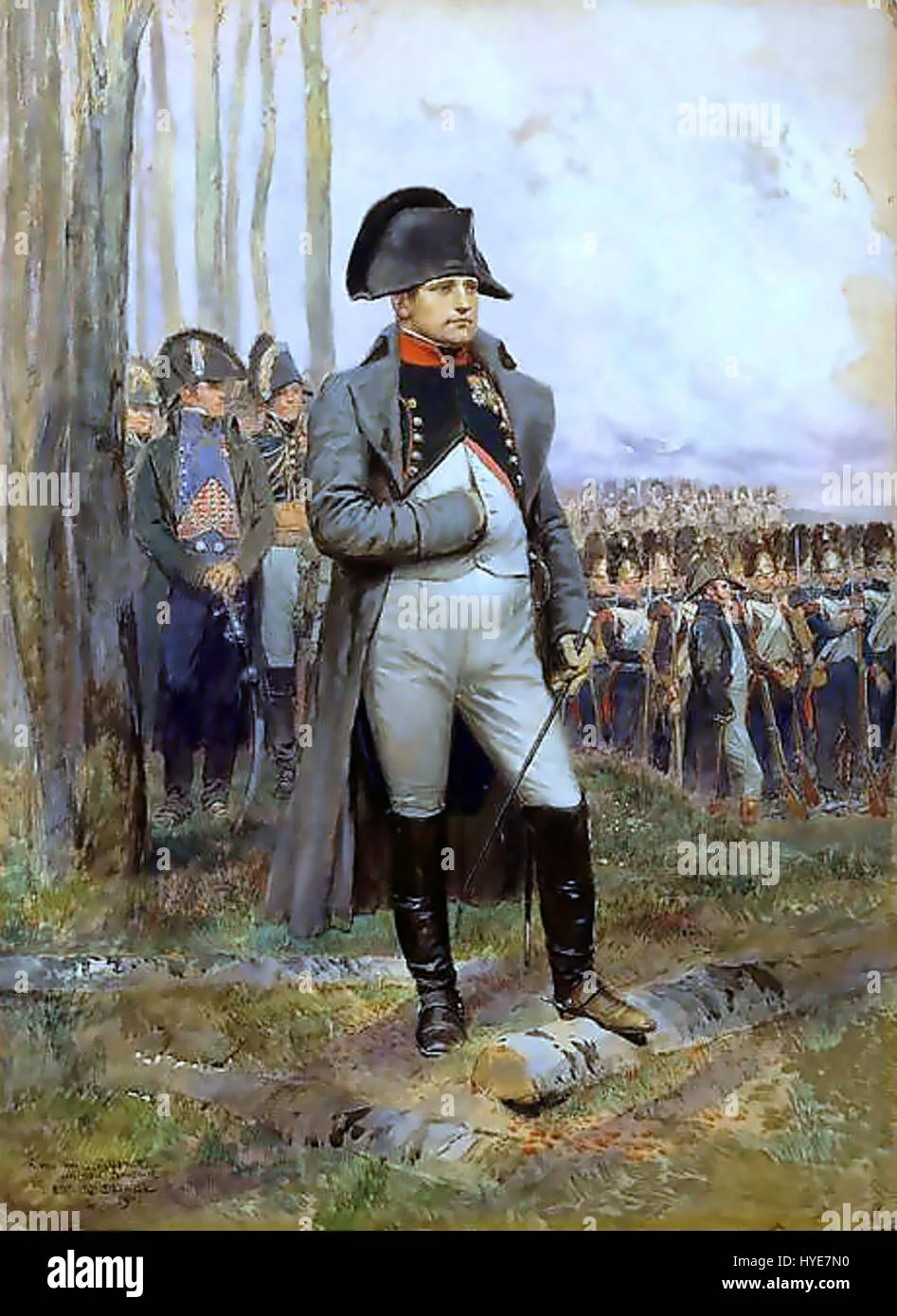 Photo: Napoleon Bonaparte, via c8.alamy.com
St. Helena, where they sent him after Waterloo, represented the lesson learned. Three thousand miles of South Atlantic Ocean proved more effective than any political arrangement. But it also demonstrated the other failure mode of exile: a man who cannot return becomes a myth, and myths are even harder to defeat than returning generals.
The Revolutionary's Sabbatical
The nineteenth and twentieth centuries produced a particular variation on the exile pattern that deserves sustained attention. Revolutionary movements, operating in the spaces between legitimate political structures, demonstrated repeatedly that exile could function as a kind of graduate education in political organization.
Vladimir Lenin spent years in Western Europe before the October Revolution, using his distance from Russia to develop ideology, build networks, and communicate with followers through publications that crossed borders more easily than people. Ho Chi Minh worked as a cook in London and a photographer's assistant in Paris before returning to Vietnam to lead a revolution that would eventually outlast the world's most powerful military. The Cuban exile community that gathered in Florida after 1959 partially reversed the equation — in that case, it was the revolutionaries who had won and their opponents who found themselves in productive, if ultimately unsuccessful, exile.
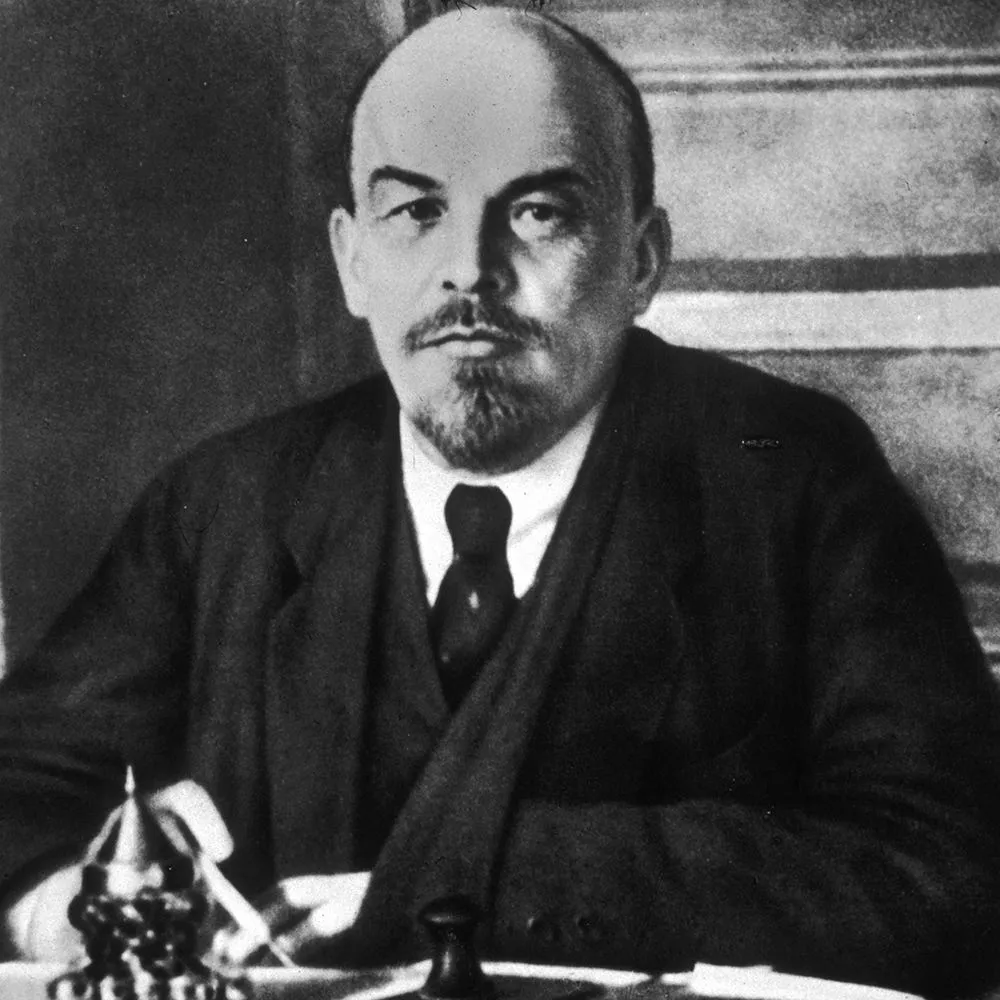 Photo: Vladimir Lenin, via hips.hearstapps.com
What these cases share is the same dynamic that troubled the Athenians: removing someone from a political context does not remove them from political life. It merely changes the conditions under which they operate — and sometimes those new conditions are more conducive to long-term planning than the daily pressures of existence inside the system.
When Exile Actually Works
Fairness requires acknowledging the cases where banishment achieved its intended purpose. The historical record contains genuine examples of rivals who faded into obscurity, whose networks dissolved, whose moment passed while they were away. These cases share common features worth noting.
Successful exile tends to require either extreme physical distance — genuine geographic isolation, not the genteel European wandering that passed for exile among nineteenth-century aristocrats — or the simultaneous destruction of the exile's political network at home. Removing the person while leaving their allies, their institutions, and their financial base intact is, historically speaking, roughly equivalent to removing a weed while leaving its roots. The visible portion disappears. The underground structure persists.
The Ottoman practice of internal exile, sending potentially dangerous figures to provincial postings rather than foreign shores, occasionally succeeded precisely because it combined distance with ongoing surveillance and the systematic removal of the exile's access to loyal subordinates. It was exile as administrative suffocation rather than exile as geographic removal.
The Permanent Lesson No One Learns
What makes the exile pattern genuinely instructive for students of contemporary politics is not its historical curiosity but its psychological consistency. The rulers who chose exile over execution were not, in the main, stupid people. Many of them understood the risks. They chose exile anyway, for reasons that have not changed in five thousand years: the desire to appear merciful, the hope that time would solve what force could not, and the deeply human tendency to underestimate the resilience of people who have been given a grievance and the leisure to nurse it.
The exiled rival, meanwhile, has consistently demonstrated the same psychological profile across cultures and centuries. Removed from power, they do not accept their removal as permanent. They plan. They correspond. They wait. And when the moment comes — as it came for Napoleon on Elba, as it came for Lenin at the Finland Station, as it has come for a remarkable number of figures that history initially recorded as finished — they discover that their enemies have spent years governing while they spent years preparing.
The record is not ambiguous. Killing rivals creates martyrs. Exiling them creates candidates. Neither option is clean, which is perhaps why the choice between them has occupied political minds for as long as political minds have existed — and why it will continue to occupy them long after the current cast of exiles and exile-makers has been replaced by the next.