The Announcement Always Sounds Like Progress
The official justifications are remarkably consistent across five thousand years. Overcrowding. Geographic centrality. Environmental sustainability. The need for a "fresh start" that better reflects the nation's future. When Egyptian pharaoh Akhenaten abandoned Thebes around 1346 BCE and constructed Amarna in the desert, he described it as a divine mandate. When Indonesian President Joko Widodo announced in 2019 that the capital would be relocated from Jakarta to a newly constructed city in Borneo, the stated rationale was flooding, subsidence, and traffic congestion. When Burma's military junta quietly transferred operations to the purpose-built Naypyidaw in 2005 — with almost no public announcement — the generals cited administrative efficiency.
None of these explanations are entirely false. None of them are the primary reason.
The record of human governance, examined across its full breadth, reveals a different pattern: capital relocations cluster around moments of political consolidation, factional conflict, or elite anxiety. The city being abandoned is not merely inconvenient. It is dangerous. It is populated by the wrong people, controlled by the wrong institutions, and saturated with the wrong memory.
The Old City Knows Too Much
Power accumulates in capital cities the way sediment accumulates at a river's mouth — slowly, invisibly, until the channel is effectively blocked. The merchant families, the legal guilds, the ecclesiastical hierarchies, the military aristocracies: all of them grow roots in the capital, and those roots eventually reach into the foundations of governance itself.
This is not a modern problem. When Constantine effectively transferred the Roman Empire's administrative center to Constantinople in 330 CE, the old senatorial aristocracy of Rome retained enormous social prestige, economic power, and institutional memory. A new city — populated by loyalists, designed without the old families' palaces and patronage networks, physically distant from the Senate's ancient chambers — offered something no reform program could: a government building without the wrong people already inside it.
Brazil's construction of Brasília, inaugurated in 1960, follows the same logic with striking fidelity. Rio de Janeiro was not simply the existing capital; it was the headquarters of the coffee barons, the financial elite, and the entrenched bureaucratic class that had effectively governed Brazil regardless of who nominally held the presidency. Moving the capital to a planned city carved from the interior cerrado was, among other things, a declaration that the old arrangement was over. President Juscelino Kubitschek understood, as Constantine had understood sixteen centuries earlier, that you cannot reform an institution from within when the institution owns the building.
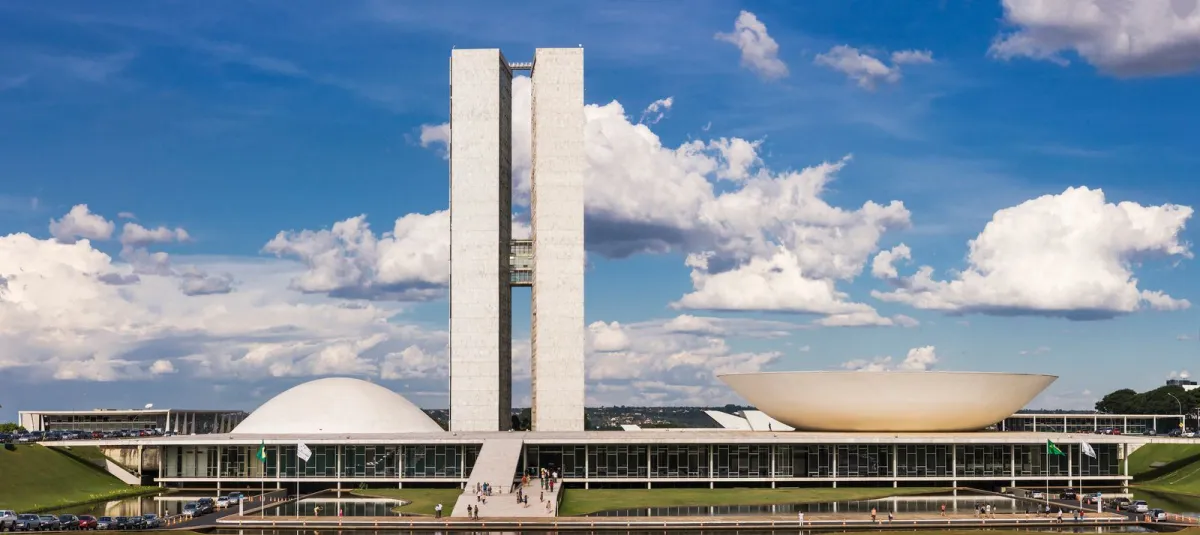 Photo: Brasília, via media.architecturaldigest.com
The Jungle Is Easier to Control Than the Boulevard
There is a secondary advantage to construction in undeveloped territory that every leader who has attempted it understands implicitly: the new city has no history. It has no neighborhoods where opposition movements have traditionally gathered. It has no newspapers that predate the current government. It has no monuments to inconvenient predecessors. The physical space is, in the most literal sense, a blank page.
Nazarbayev's decision to relocate Kazakhstan's capital from Almaty to the newly constructed Astana in 1997 — later renamed Nur-Sultan, and since renamed again — illustrates the dynamic with unusual clarity. Almaty was Kazakhstan's largest city, its cultural center, and the home of its most established economic and political networks. It was also, critically, a city with its own identity that did not depend on the president for its sense of self. Astana had no such problem. It was built to the government's specifications, populated largely by government employees, and architecturally designed to project a particular vision of Kazakhstani national identity — one authored entirely by the administration that built it.
Nigeria's construction of Abuja, which replaced Lagos as the federal capital in 1991, followed similar reasoning. Lagos was (and remains) the country's commercial engine, but it was also predominantly Yoruba in character and deeply associated with southern political interests. A central location for the new capital was the geographic justification. The political justification was that no single ethnic or regional faction would be able to claim the capital as its own territory.
The Symbol Is the Substance
American readers may find this pattern most legible through a domestic example that is often underappreciated. Washington, D.C., was not selected as the federal capital because the Potomac River was the obvious geographic center of the new republic. It was selected, through a compromise that Alexander Hamilton and James Madison negotiated over dinner in 1790, precisely because it was not New York, not Philadelphia, and not Boston. Each of those cities represented a concentration of economic and political power that other factions regarded with deep suspicion. A new city, built on land ceded by Virginia and Maryland, controlled by no existing state, represented a federal authority that belonged to no single regional interest.
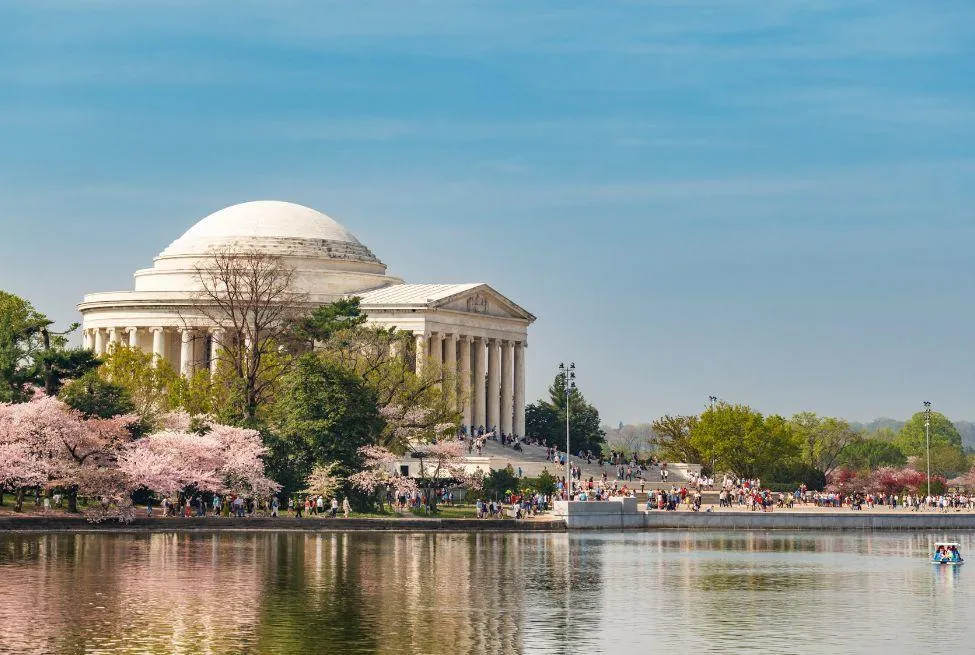 Photo: Washington, D.C., via media.tacdn.com
The Founders understood, whether consciously or intuitively, what the historical record confirms: the city that houses the government eventually tries to govern the government. The solution, applied repeatedly across civilizations and centuries, is to build a city that owes its existence entirely to the state it serves.
What the Pattern Tells Us Now
Indonesia's planned capital, Nusantara — still under construction in East Kalimantan — is the most recent iteration of this ancient script. Jakarta is sinking, yes. It is also the home of Indonesia's most powerful business dynasties, its most established media institutions, and its most organized civil society networks. Borneo offers none of those complications.
Myanmar's Naypyidaw, now two decades old, provides a cautionary counterpoint. The military's new capital is largely empty of the organic civic life that gives cities their political weight. It succeeded in removing the government from Rangoon's population centers. It did not succeed in legitimizing the government, because legitimacy cannot be constructed on a blueprint. The monuments went up. The people did not come.
This is the consistent failure mode of the capital relocation strategy: it solves the problem of entrenched opposition in the old city while creating a new problem in the new one. A government that must build its own symbolic center from scratch is advertising, to anyone paying attention, that it could not inherit the one that already existed.
Five thousand years of this particular maneuver suggest a conclusion that no relocation announcement has ever included: the leader who fears the capital fears, at some level, the judgment of the people who know them best. The jungle is more accommodating. It has not been watching.