Generosity as Governance: The Unbroken Transaction Between Wealth and Public Approval
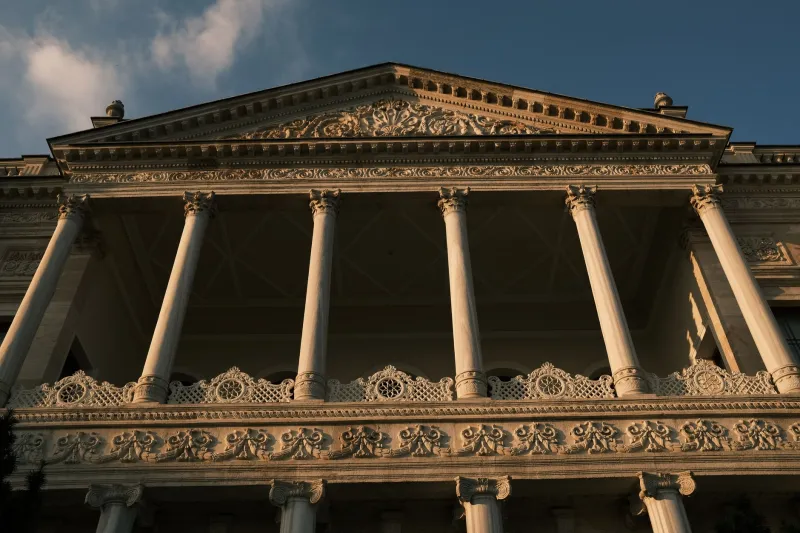
In the Roman world, the practice had a name: euergetism, from the Greek word for benefactor. Wealthy citizens — senators, merchants, military commanders who had profited from conquest — funded public buildings, sponsored games, underwrote grain distributions, and paid for the repair of roads and temples. The practice was not optional in any meaningful social sense. It was the price of elite status, the mechanism by which those who possessed extraordinary wealth converted it into something that the broader population might tolerate: extraordinary prestige.
The Romans did not invent this transaction. They inherited it from the Greeks, who had inherited it from older traditions stretching back to the earliest urban civilizations. And when Rome fell, the transaction did not fall with it. It simply found new institutional homes — the Church, the merchant republics of Renaissance Italy, the aristocracies of early modern Europe, and eventually the industrialist dynasties of nineteenth and twentieth-century America. The names changed. The logic did not.
The Price of Being Rich in Public
The fundamental dynamic that drives philanthropic behavior across historical periods is one that modern political psychology has documented in laboratory settings but that the historical record illustrates with far greater complexity and scale: human beings living in social groups have always maintained an implicit accounting of who takes from the common pool and who contributes to it. Those perceived as taking too much, for too long, without reciprocal contribution, generate social hostility that eventually becomes politically dangerous.
Concentrated wealth is, almost by definition, a form of taking from the common pool — or at least it is perceived that way by those who do not possess it. The philanthropic impulse, whatever its subjective character in the mind of the individual donor, functions socially as a corrective mechanism: a visible, nameable act of return that rebalances the implicit ledger and purchases renewed tolerance for the underlying inequality that made the gift possible.
This is not a cynical interpretation imposed from outside. It is what the historical actors themselves frequently said, when they were being candid. Roman magistrates who funded public works explicitly described the practice in terms of obligation — the wealthy owed something to the city that had made their wealth possible. The Medici family, whose banking operations made them the dominant financial power of fifteenth-century Florence, patronized Brunelleschi, Donatello, and Michelangelo not in secret but with conspicuous public investment in religious and civic buildings that bore their visual mark. The art was genuine. The political calculation was equally genuine. The two were not in conflict.
The American Iteration
The United States produced its own version of this dynamic with unusual speed and unusual scale. The industrial fortunes assembled in the decades following the Civil War — in steel, oil, railroads, and finance — were so large, and assembled through methods so visibly brutal, that they generated political pressures that threatened the legal and social structures that made them possible. The response, pioneered most explicitly by Andrew Carnegie and John D. Rockefeller, was philanthropic institution-building on a scale that had no real precedent in American history.
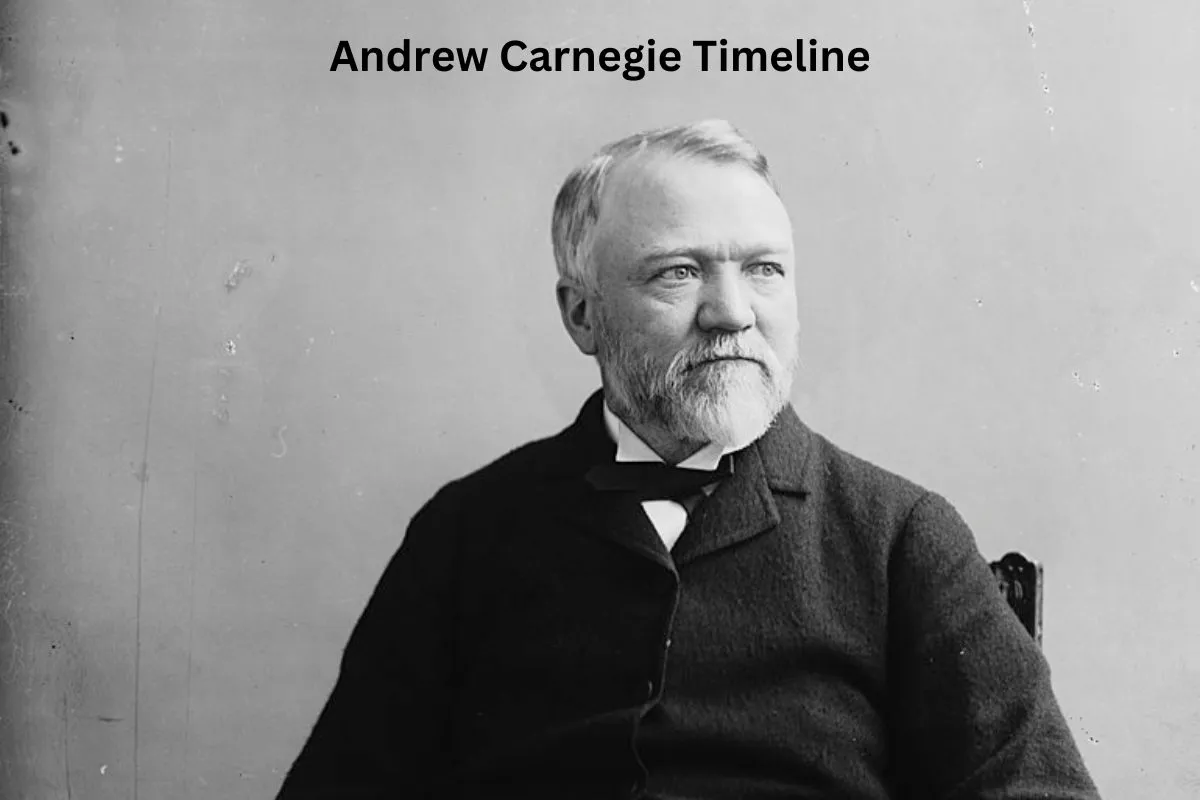 Photo: Andrew Carnegie, via www.havefunwithhistory.com
Carnegie's libraries are the most legible example. Between 1883 and 1929, Carnegie funding built 2,509 public libraries, the majority of them in the United States. The libraries were genuinely useful. They provided genuine educational resources to communities that lacked them. Carnegie's personal belief in the redemptive power of self-education was, by all available evidence, sincere. None of this contradicts the observation that the library program also served as an extraordinarily effective reputational intervention at a moment when Carnegie's name was associated, in the public mind, with the Homestead Strike of 1892 — in which striking steelworkers were shot by Pinkerton agents hired by Carnegie's company while Carnegie himself was conveniently absent in Scotland.
The libraries did not erase Homestead from the historical record. But they created a competing image, reproduced in thousands of communities across the country, that outlasted the immediate political crisis and survived into a kind of cultural permanence. When Americans today think of Carnegie, they are more likely to think of Carnegie Hall or Carnegie Mellon University than of the events at Homestead. That outcome was not accidental.
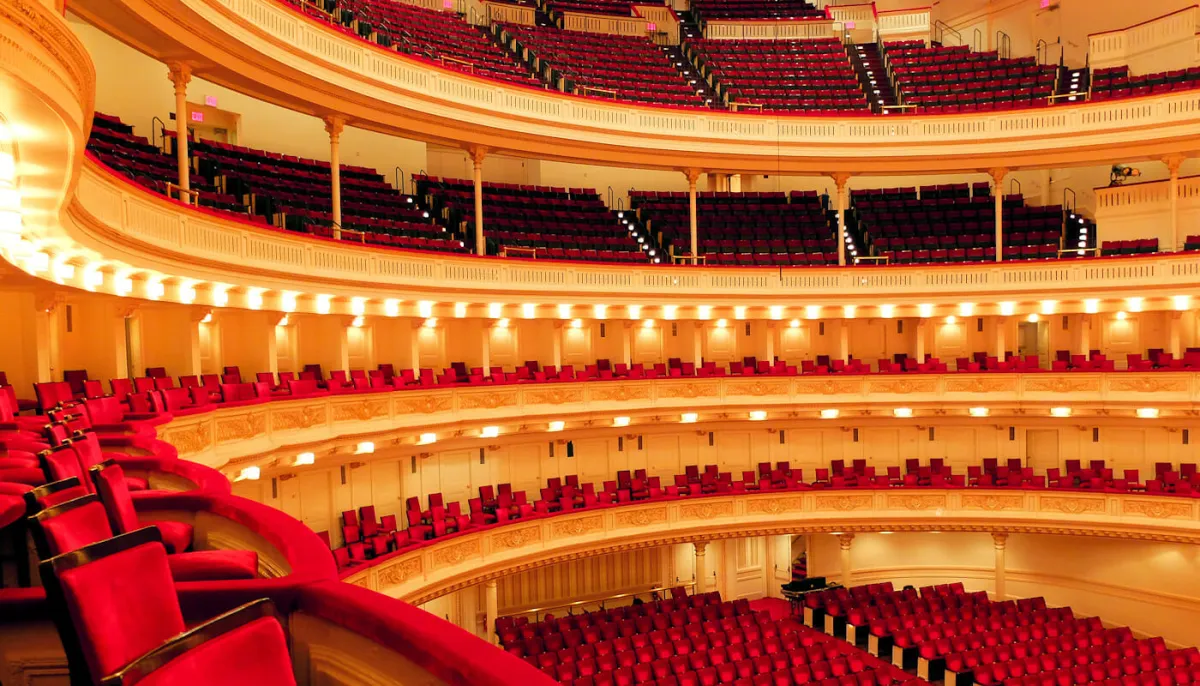 Photo: Carnegie Hall, via image.newyork.co.uk
The Institutional Permanence of Philanthropic Power
One dimension of the philanthropic transaction that receives insufficient attention is its temporal structure. A political campaign buys influence for an election cycle. A lobbying operation purchases access for as long as the retainer is maintained. A philanthropic institution, properly endowed and legally structured, purchases something far more durable: ongoing cultural and social authority that persists across generations, independent of the continued wealth or even the continued existence of the founding family.
The Rockefeller Foundation, established in 1913, has continued to shape public health policy, agricultural development, and social science research for more than a century. The Ford Foundation, established in 1936, has funded civil rights organizations, international development programs, and academic institutions across the globe. These organizations operate today with a legitimacy derived partly from their accumulated track record and partly from the institutional permanence that distinguishes them from more nakedly political operations.
This is the sophisticated version of what Chinese merchants did when they funded city walls in the Tang and Song dynasties, what Florentine bankers did when they paid for cathedral construction, and what Roman senators did when they built aqueducts. The gift creates an institution. The institution outlives the giver. The institution carries the giver's name — and, more importantly, the giver's values, priorities, and conception of the social good — into a future that neither the giver nor anyone else can fully control but that the gift helps to shape.
Moral Achievement or Sophisticated Management?
The question posed most sharply about philanthropic behavior — whether it represents genuine moral achievement or the most sophisticated public relations operation ever invented — is, on the evidence of five thousand years, probably the wrong question. The historical record does not support a clean distinction between the two.
The Roman senator who funded a public bath genuinely believed in the value of public bathing. He also genuinely wanted the votes and social standing that the gift would generate. The Medici genuinely loved art. They also genuinely needed the Church's goodwill and Florence's political support. Carnegie genuinely believed in the civilizing power of books. He also genuinely needed to survive the political consequences of Homestead. These motivations were not in competition. They were, in the minds of the actors involved, the same motivation — because in a world where social legitimacy is a prerequisite for the exercise of wealth and power, contributing to the social good is simultaneously an act of conscience and an act of self-preservation.
What the historical record does support, clearly and across cultures, is the observation that this transaction has always been understood by both parties. The public that accepts the library, the aqueduct, or the endowed university chair is not naive about the interests being served. It accepts the gift because the gift is useful, and because the alternative — a wealthy class that takes without giving — is worse. The philanthropist understands that the gift is expected and that failure to give has consequences. The exchange is conducted in the currency of public approval, and both sides know the exchange rate.
The contemporary debate about whether billionaire philanthropy represents a legitimate substitute for democratic taxation, or whether it allows the wealthy to direct social resources according to their own priorities rather than collective democratic decision-making, is a genuinely important debate. It is also, in its essential structure, a debate that Roman citizens were having two thousand years ago — and that they never fully resolved, because the underlying tension between concentrated wealth and social legitimacy is not a problem that gets solved. It is a condition that gets managed, generation after generation, through the same ancient transaction: the gift, the name above the door, and the complicated gratitude of the public that accepts both.