Justice for Sale: How Legal Systems Transform into Tools of Political Revenge
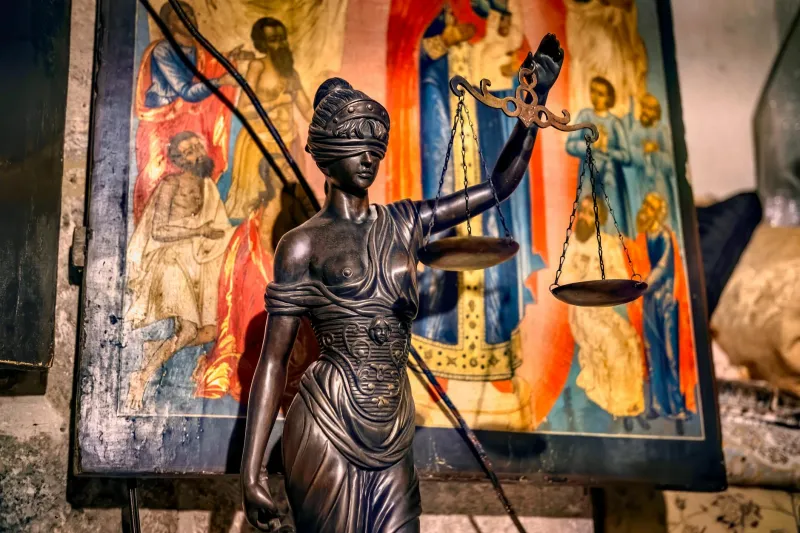
The Prosecutor's Dilemma
In 58 BCE, Marcus Tullius Cicero fled Rome in the dead of night. The greatest orator of his age had made a fatal miscalculation: he believed the law would protect him from politics. Within months, the same legal system that had elevated him to consul was being wielded like a sword by his enemies, who had discovered that destroying a man through the courts carried more legitimacy than destroying him through violence.
Cicero's exile marks one of history's earliest documented cases of what we might now recognize as lawfare—the systematic use of legal proceedings to achieve political ends. But he was neither the first nor the last to learn that in the hands of ambitious politicians, the machinery of justice becomes indistinguishable from the machinery of revenge.
The Ancient Script
The pattern is so consistent across civilizations that it suggests something fundamental about human nature and institutional design. Every successful weaponization of the legal system begins the same way: with prosecutions that appear not only legitimate but necessary. The targets are genuinely unpopular, their crimes real or at least plausible. Public opinion supports the proceedings. Opposition voices are muted.
Sulla's proscription lists in 82 BCE started with the execution of genuine enemies of the state. Stalin's show trials began with actual conspirators and saboteurs. The machinery always justifies itself with authentic threats before it discovers an appetite for manufactured ones.
The genius of this approach lies in its incremental nature. Each prosecution establishes precedent for the next. Each expansion of prosecutorial power seems reasonable in isolation. By the time the system turns on its creators—as it inevitably does—the institutional safeguards have been so thoroughly eroded that resistance becomes impossible.
The Founder's Nightmare
The American founding generation understood this dynamic with crystalline clarity. They had watched Parliament use treason laws to silence colonial dissent. They had seen how easily courts could be transformed into weapons when judges served at the pleasure of the crown rather than the constitution.
This is why the Bill of Rights reads like a prosecutor's nightmare: double jeopardy protections, requirements for grand juries, prohibitions on bills of attainder, guarantees of due process. Every clause represents a specific historical lesson about how legal systems fail when political pressure exceeds institutional resistance.
Yet even these elaborate safeguards prove insufficient when the underlying culture shifts. Constitutional protections are only as strong as the people charged with enforcing them. When prosecutors view themselves as soldiers in a political war rather than servants of impartial justice, even the most carefully crafted legal framework begins to buckle.
The Modern Machinery
Today's weaponization operates with more sophistication than its historical predecessors, but the fundamental mechanics remain unchanged. Modern prosecutors possess tools that would have made Torquemada weep with envy: RICO statutes that transform association into conspiracy, regulatory codes so complex that compliance becomes impossible, surveillance capabilities that make privacy obsolete.
The beauty of the modern approach lies in its veneer of legitimacy. Unlike Sulla's naked proscription lists or Stalin's theatrical confessions, contemporary political prosecutions hide behind prosecutorial discretion and selective enforcement. Everyone commits three felonies a day, as the saying goes; the only question is whom the state chooses to notice.
This creates what legal scholars call the "everyone's guilty" problem. When the law is so vast and complex that universal compliance becomes impossible, enforcement becomes entirely discretionary. And discretionary enforcement, however well-intentioned, inevitably becomes political enforcement.
The Loyal Opposition's Last Stand
The most insidious aspect of legal weaponization is how it corrupts the concept of loyal opposition. Democratic systems depend on the principle that political opponents are adversaries, not enemies—that today's minority might become tomorrow's majority through persuasion and electoral success rather than prosecution and imprisonment.
When the legal system becomes a political weapon, this social contract dissolves. Opposition becomes existentially dangerous. Compromise becomes collaboration with criminals. The incentive structure shifts from winning elections to winning prosecutions.
History suggests that once this threshold is crossed, the system rarely recovers through normal political processes. The machinery of legal persecution, once established, develops its own momentum and constituency. Prosecutors who built careers on political cases have little incentive to declare their life's work illegitimate. Bureaucracies that expanded their power through selective enforcement resist any return to constitutional constraints.
The Price of Precedent
Perhaps the most sobering lesson from five thousand years of legal weaponization is how quickly the precedents spread. Rome's proscription lists inspired similar purges across the Mediterranean. Stalin's show trials provided a template for every subsequent communist regime. Modern innovations in lawfare spread from country to country like a virus, adapted to local conditions but preserving the essential DNA.
The American legal system, once considered the gold standard for due process and constitutional protection, now exports techniques of selective prosecution and regulatory harassment to aspiring autocrats worldwide. What was designed as a bulwark against tyranny has become a blueprint for its implementation.
The founders' elaborate safeguards remain in place, at least on paper. But constitutional protections without constitutional culture are mere parchment barriers against institutional decay. When prosecutors become partisans and judges become politicians, the law dies—even when the legal system survives.
The question facing any democracy is not whether its legal institutions are strong enough to resist political pressure, but whether its political culture still believes that some victories are too expensive to pursue. Once that belief disappears, the law becomes just another weapon in an endless war—and everyone, eventually, becomes a target.