Emergency Powers Never Go Home: The Five-Thousand-Year History of Temporary Becoming Permanent

The Roman Constitution was quite specific about dictatorships: six months maximum, clearly defined emergency, immediate return to normal governance upon resolution. The system worked for centuries, producing leaders like Cincinnatus who famously returned to his farm after saving the republic. Then came Julius Caesar, who found reasons why his emergency simply couldn't end on schedule.
 Photo: Cincinnatus, via www.worldhistory.org
 Photo: Julius Caesar, via www.creativefabrica.com
Caesar's precedent established a pattern that has repeated across cultures and centuries with mechanical precision. Emergency powers arrive dressed as reluctant necessities, temporary exceptions to normal rules. They promise to leave once the crisis passes. They never do.
The Vocabulary of Temporary Forever
The language surrounding emergency powers reveals their true nature. Consider how often these "temporary" measures are described: "extraordinary circumstances," "unprecedented challenges," "regrettable but necessary." The rhetoric always emphasizes reluctance—leaders don't want these powers, they're forced to accept them by circumstances beyond anyone's control.
This framing serves a crucial psychological function. It transforms the expansion of authority from an aggressive power grab into a defensive response. The leader isn't seizing control; they're shouldering an unwanted burden for the greater good. This narrative makes the expansion palatable to populations who might otherwise resist.
The Weimar Republic's Article 48 exemplifies this dynamic perfectly. Designed as an emergency provision for the president to govern by decree during constitutional crises, it was carefully crafted with limitations and safeguards. The framers understood the danger of unlimited executive power and wrote specific constraints into the law.
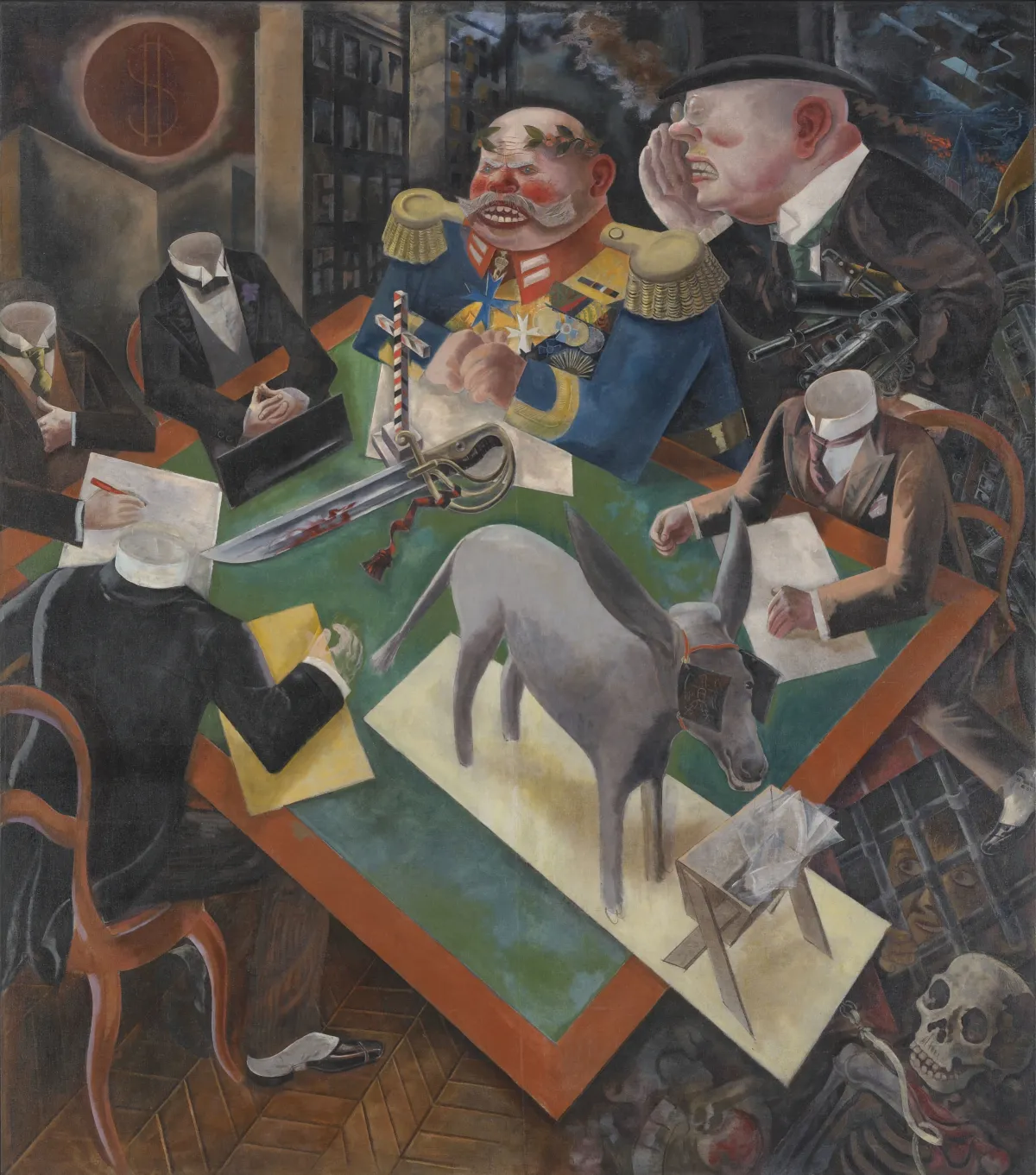 Photo: Weimar Republic, via www.thalo.com
Those constraints proved meaningless when Heinrich Brüning began governing through emergency decrees in 1930. The economic crisis provided the justification; the constitutional framework provided the mechanism. By the time Hitler assumed power, emergency rule had already become normal governance. The Enabling Act of 1933 simply formalized what had already occurred through "temporary" measures.
The American Experience
The United States has followed this historical pattern with characteristic innovation, creating emergency powers that are simultaneously permanent and invisible. The National Emergencies Act of 1976 was designed to limit presidential emergency authority by requiring periodic renewal and congressional oversight. Instead, it institutionalized permanent crisis.
As of 2024, the United States operates under more than thirty active national emergencies, some dating back decades. The 1979 emergency regarding Iran remains in effect. The 2001 emergency declared after September 11th has been renewed every year for over two decades. These aren't forgotten bureaucratic artifacts—they're active legal frameworks that expand executive authority far beyond what normal legislation would permit.
The post-9/11 expansion demonstrates how modern democracies have refined the ancient script. The USA PATRIOT Act was explicitly written with sunset provisions—temporary authorities that would expire unless renewed. This design was supposed to force periodic reconsideration of expanded surveillance powers.
Instead, it created a political dynamic where opposing renewal became tantamount to supporting terrorism. Each reauthorization debate focused not on whether these powers were still necessary, but on whether politicians were willing to "weaken national security" by allowing them to expire. The sunset provisions became renewal ceremonies rather than genuine reconsiderations.
The Ratchet Effect
Emergency powers operate like a mechanical ratchet—they click forward easily but resist backward movement. Each crisis provides justification for new authorities, but the end of a crisis never provides sufficient justification for surrendering them. Instead, new emergencies emerge to justify maintaining expanded powers, or existing powers find new applications beyond their original scope.
The Federal Reserve's emergency lending facilities illustrate this perfectly. Created during the 2008 financial crisis to prevent systemic collapse, these programs were supposed to be temporary interventions in extraordinary circumstances. Instead, they became permanent features of monetary policy, deployed during the COVID-19 pandemic for purposes that would have been inconceivable to their original designers.
This expansion occurs through bureaucratic momentum as much as conscious design. Agencies that gain emergency authorities develop constituencies and procedures around those powers. Entire departments organize themselves around temporary missions that become permanent responsibilities. The infrastructure of emergency governance creates its own justification for continued existence.
The Psychology of Permanent Crisis
Human psychology makes this pattern almost inevitable. Populations that accept emergency powers during genuine crises develop psychological investment in believing those powers remain necessary. Admitting that emergency authorities should be surrendered requires acknowledging that the original crisis has passed—a conclusion that feels dangerous when new threats constantly emerge.
This dynamic explains why emergency powers persist long after their triggering events. The 1933 Banking Act gave the president authority to regulate gold ownership during the Great Depression. That authority wasn't fully repealed until 1974, decades after the economic crisis had ended and the gold standard had been abandoned. The emergency had become part of normal governance.
Modern media accelerates this process by ensuring that new crises appear before old ones fully resolve. The 24-hour news cycle creates a permanent sense of emergency that makes surrendering crisis authorities feel irresponsible rather than constitutional.
The Institutional Memory Problem
Institutions forget why limitations on power exist, but they never forget how to exercise power once granted. The officials who implement emergency authorities rarely have personal memory of governance without those powers. To them, expanded authority isn't an exception to normal governance—it is normal governance.
This institutional amnesia explains why emergency powers rarely face serious internal resistance. The bureaucrats who would need to recommend their termination are the same people whose jobs depend on their continuation. Asking agencies to voluntarily surrender authority is like asking armies to recommend their own disbandment.
The Eternal Emergency
History suggests that truly temporary emergency powers may be impossible within human political systems. The combination of institutional incentives, psychological biases, and genuine ongoing challenges creates an environment where every temporary authority discovers reasons for its own permanence.
This isn't necessarily malicious—many emergency powers do address real problems that persist beyond their original crisis. But the pattern is clear enough that any expansion of government authority during emergencies should be evaluated not as a temporary exception, but as a permanent addition to the state's toolkit.
The next time politicians promise that expanded powers are temporary, necessary, and will definitely be surrendered when the crisis passes, remember the Roman dictatorship. It was a good system, carefully designed with specific limitations. It worked exactly as intended until it didn't. The crisis that never ends is the oldest story in politics, and it's being written again right now.