The People's Veto on the People's Rights: How Direct Democracy Has Always Served Those Who Fear Deliberation
The People's Veto on the People's Rights: How Direct Democracy Has Always Served Those Who Fear Deliberation
There is no more emotionally satisfying phrase in democratic politics than "let the people decide." It has an inarguable quality, a moral clarity that makes opposition seem not merely wrong but somehow anti-democratic. Who could argue against the people? What institution could claim higher legitimacy than the direct expression of popular will?
The historical record could. And does. Consistently.
Across five thousand years of political organization, the direct popular vote — the plebiscite, the referendum, the ratification by assembly — has been reached for most eagerly not by those who trusted the people but by those who understood how to manage them. The pattern is not incidental. It reflects something durable about human psychology and the architecture of political power.
Caesar and the Arithmetic of Legitimacy
Gaius Julius Caesar was not, by the standards of his era, a crude tyrant. He was a sophisticated political operator who understood that raw power required the coating of legitimacy to be sustainable. His dictatorship was not simply seized; it was repeatedly ratified — by the Senate, by popular assemblies, by the acclamation of crowds whose enthusiasm was genuine even as the institutional structures constraining that enthusiasm were being methodically dismantled.
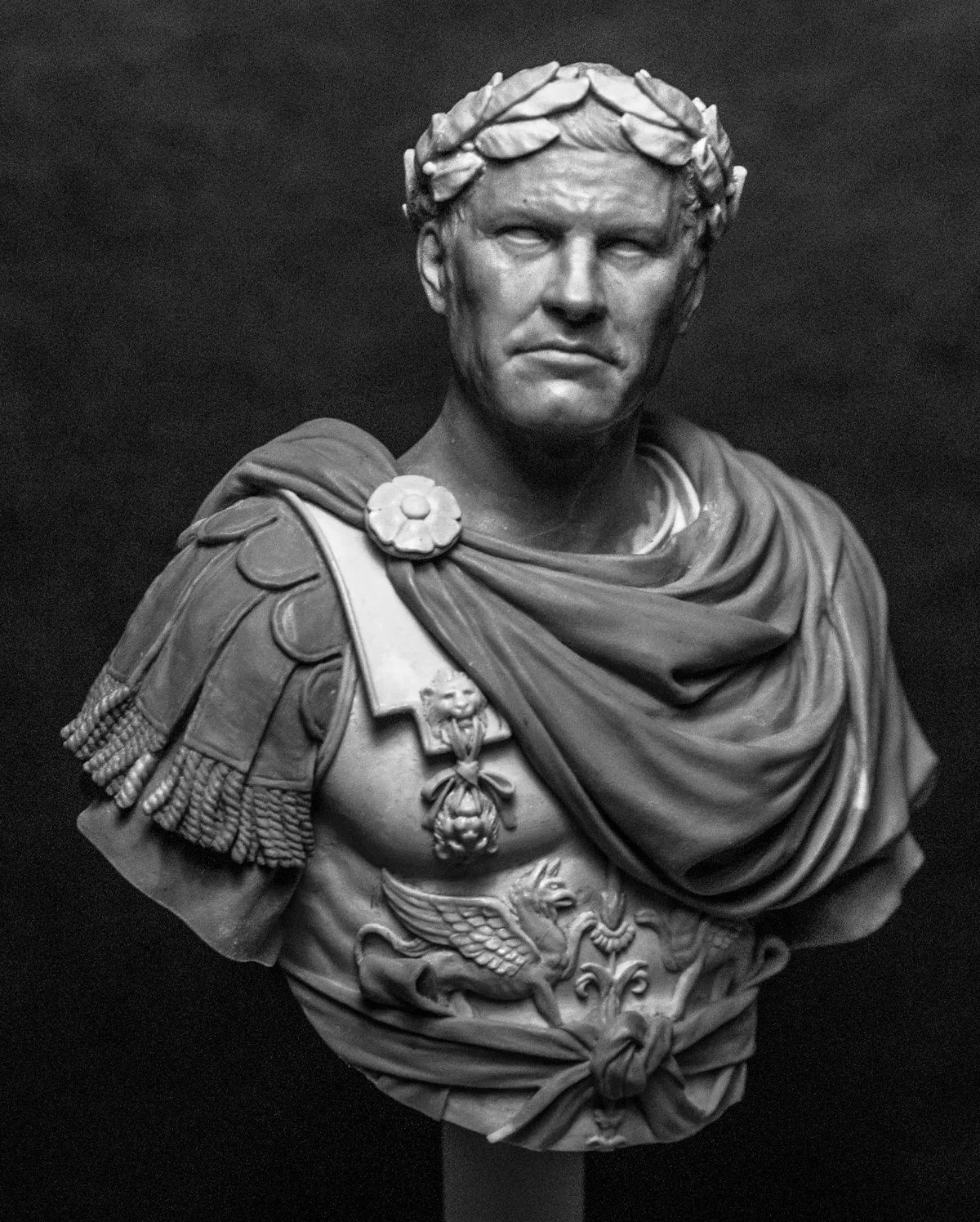 Photo: Gaius Julius Caesar, via i.pinimg.com
The Roman popular assemblies were not meaningless fictions. The people who participated in them had real feelings about Caesar, and many of those feelings were positive. He had redistributed land. He had reformed the calendar. He had extended citizenship. The acclamations were not manufactured from nothing. But the assemblies were also not deliberative bodies capable of examining what they were ratifying. They were ratification machines — structures that transformed a political fait accompli into a popular mandate.
This is the core mechanism. The plebiscite does not ask whether the people want what is being offered. It asks whether they prefer what is being offered to the alternative as framed by whoever controls the framing. The person who controls the question controls the answer.
Napoleon's Three Plebiscites
Napoleon Bonaparte conducted three national plebiscites during his time in power. The first, in 1800, ratified the Constitution of the Year VIII — the document that made him First Consul and effectively ended the French Republic. The second, in 1802, made him Consul for Life. The third, in 1804, made him Emperor.
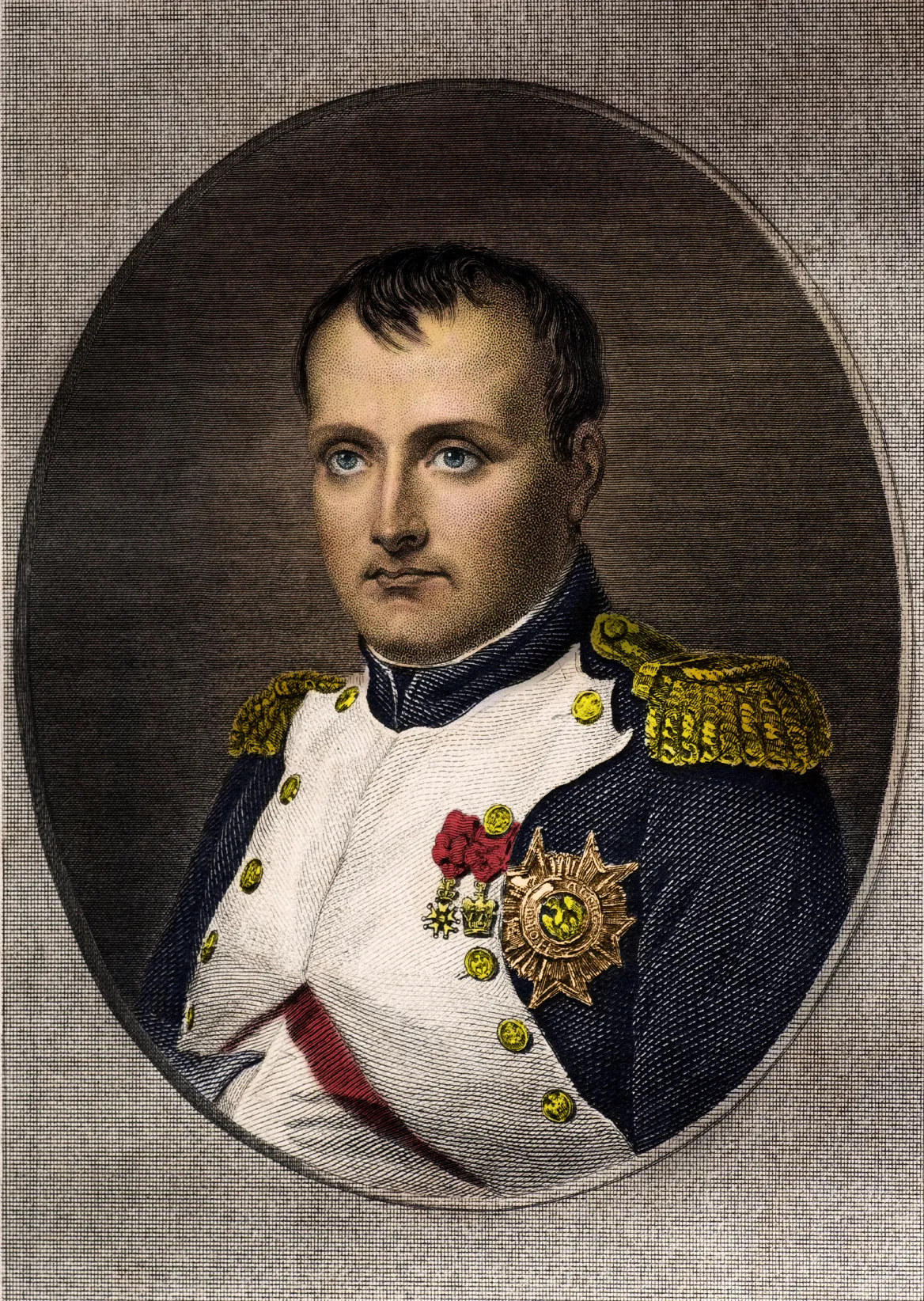 Photo: Napoleon Bonaparte, via d.ibtimes.co.uk
Each vote produced overwhelming majorities. Each vote was also conducted under conditions that modern electoral observers would find disqualifying: voter rolls were manipulated, abstentions were recorded as affirmative votes in some counts, and the institutional infrastructure for genuine deliberation — a free press, an independent legislature, organized opposition — had been progressively eliminated before each successive question was posed.
But here is the uncomfortable complication that the historical record forces us to confront: the enthusiasm was not entirely manufactured. Napoleon was genuinely popular. The French people had lived through a decade of revolutionary chaos, terror, and instability. A strong leader who promised order and glory was not an unwelcome proposition to a population exhausted by uncertainty. The plebiscite did not create Napoleon's popularity. It harvested it — and in harvesting it, converted popular sentiment into institutional permanence that popular sentiment alone could not later reverse.
This is the trap. By the time a population understands what it ratified, the institutions that might have allowed reconsideration have been replaced by the thing that was ratified.
The Weimar Provision That Wasn't Used — and the One That Was
The Weimar Republic's constitution included provisions for popular referenda on legislation. The mechanism was included in good faith, as a democratic pressure valve. It was used, in practice, primarily by the republic's enemies — the far right and the far left both attempted to use referendum provisions to destabilize the government they were each, for different reasons, committed to destroying.
 Photo: Weimar Republic, via kkinghistory12.weebly.com
More consequentially, the Nazi consolidation of power in 1933 and 1934 was accompanied by plebiscitary ratification. The merger of the offices of Chancellor and President following Hindenburg's death in 1934 was submitted to a popular vote. Approximately 90 percent of voters approved — in an election conducted after the opposition had been banned, the press had been brought under state control, and the institutional framework for genuine deliberation had been eliminated.
The vote was not meaningless. It reflected real popular sentiment in a country where the new regime had, in its first year, reduced unemployment and restored a sense of national purpose that many Germans found genuinely appealing. It also ratified a constitutional change that no subsequent popular vote could reverse, because the conditions for a genuine popular vote no longer existed.
The Modern Playbook
The twentieth and twenty-first centuries have generated a substantial library of case studies on referendum-based consolidation. Venezuela's Hugo Chávez used a constituent assembly referendum in 1999 to bypass the existing legislature and rewrite the constitutional order — with genuine popular support from a population that had real grievances against the existing political class. The 1999 constitution was, in many respects, more democratic on paper than what it replaced. The political culture it enabled was not.
Turkey's 2017 constitutional referendum, which replaced the parliamentary system with an executive presidency and dramatically concentrated power in a single office, passed with 51.4 percent of the vote under a state of emergency following a coup attempt, with the main opposition parties and international observers raising serious procedural concerns. The referendum was legal. The conditions under which it was conducted were not what most democratic theorists would describe as free and fair. The result was binding.
In each case, the referendum served a consistent function: it converted a political moment — a crisis, a wave of popular sentiment, a period of institutional weakness — into a constitutional fact that proved extremely difficult to subsequently reverse through democratic means.
Why Representative Inefficiency Is a Feature
The American constitutional system's founders were not naive about direct democracy. The Federalist Papers contain extensive arguments against it, most of them grounded in observations about historical republics that had destroyed themselves through exactly the mechanisms described above. Madison's concern about faction — the tendency of temporary popular majorities to override the rights of minorities and the requirements of long-term governance — led to a system of deliberative friction that many Americans find frustrating.
That frustration is understandable. Legislatures are slow, compromised, and frequently captured by interests that do not reflect popular will. Courts make decisions that majorities oppose. The gap between what people want and what the system produces is real and generates legitimate grievance.
But the historical record suggests that the friction is not a malfunction. The requirement that major changes pass through multiple deliberative bodies, survive judicial scrutiny, and achieve durable supermajority support for constitutional amendment is precisely what makes those changes difficult to subsequently reverse. The slowness is the protection.
Direct democracy bypasses the friction. And it is the friction — the committee hearings, the legislative debate, the judicial review, the requirement of sustained rather than momentary majorities — that distinguishes a durable democratic decision from a popular mood that a skilled political operator has learned to harvest at exactly the right moment.
The Uncomfortable Finding
The record of five thousand years does not suggest that the people cannot be trusted. It suggests something more specific and more useful: that the people, like all human beings, are susceptible to the framing of choices, the management of information, and the emotional logic of crisis. These are not flaws unique to any population. They are features of human psychology that skilled political actors have understood and exploited since the first assembly was convened.
The institutions that representative democracy places between popular sentiment and constitutional change are not obstacles to self-governance. They are, at their best, the accumulated wisdom of every civilization that learned, at considerable cost, what happens when there is nothing between a moment of popular passion and a permanent political result.
The people's voice matters. The question is always who is holding the microphone.