The Coalition's Built-In Expiration Date: Why Winning Movements Always Devour Themselves
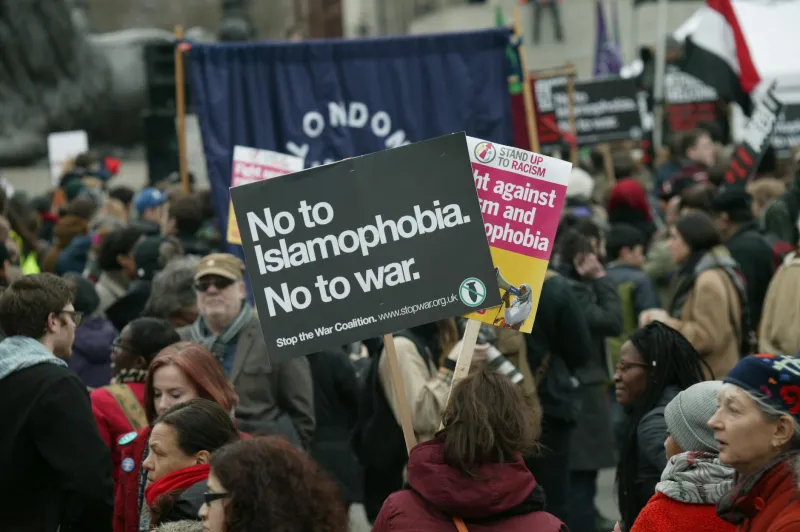
The Unity of Shared Opposition
In 1789, the Third Estate of France stood united against the monarchy with a clarity of purpose that seemed unbreakable. Peasants, merchants, lawyers, and intellectuals had found common cause against aristocratic privilege. Within four years, these same allies were sending each other to the guillotine with revolutionary fervor. The Girondins and Jacobins, once brothers in revolution, had discovered that agreeing on what to destroy provides no guidance for what to build.
This pattern appears so consistently across human political experience that it might as well be a law of physics. Coalitions form around shared enemies, not shared visions. The very breadth of opposition that makes victory possible also ensures that victory will trigger internal warfare over the spoils.
Consider the American Revolution's aftermath. The coalition that defeated Britain immediately fractured along lines that had been temporarily suppressed during the war. Federalists and Anti-Federalists had cooperated against British rule while harboring fundamentally incompatible views about federal power, economic policy, and individual rights. The moment independence was secured, these differences exploded into the bitter partisan conflicts of the 1790s.
The Mathematics of Incompatible Interests
Every successful political coalition is essentially a temporary suspension of mathematical reality. To build a winning majority, movements must attract groups whose long-term interests directly conflict. The environmental activist and the steelworker can unite against corporate influence in politics, but they will inevitably clash when environmental regulations threaten steel jobs. The small-government conservative and the defense contractor can cooperate against big-government liberals, but they will split when military spending faces budget constraints.
The Iranian Revolution of 1979 offers a perfect case study. Marxist students, Islamic fundamentalists, liberal democrats, and traditional merchants all opposed the Shah's authoritarian modernization. Their shared hatred of foreign influence and political repression created an unstoppable revolutionary force. But the moment the Shah fell, these groups turned on each other with a ferocity that made their opposition to the monarchy look gentle by comparison.
The Islamic fundamentalists ultimately prevailed not because they were the largest faction, but because they were the only group with a coherent post-revolutionary vision and the organizational discipline to implement it. The other factions had defined themselves primarily by what they opposed rather than what they proposed.
The American Tea Party's Predictable Fracture
The Tea Party movement that emerged after 2008 followed this same trajectory with textbook precision. Fiscal conservatives, social conservatives, libertarians, and populist nationalists found common ground in opposing Barack Obama's expansion of federal power. This coalition achieved remarkable electoral success in 2010 and 2014, fundamentally reshaping the Republican Party.
But the movement contained obvious internal contradictions from the beginning. Libertarians wanted to shrink government across the board, including military spending and social programs popular with older voters. Social conservatives prioritized cultural issues that many fiscal conservatives considered distractions. Populist nationalists supported trade protections and infrastructure spending that horrified free-market purists.
By 2016, these factions were supporting different presidential candidates and articulating incompatible visions for American conservatism. The coalition that had seemed so unified in opposition to Obama split along predictable lines once it faced the challenge of governing rather than opposing.
The Structural Logic of Self-Destruction
This pattern persists because coalition-building requires strategic ambiguity about post-victory plans. To maintain unity during the struggle, successful movements defer difficult decisions about priorities and implementation. They speak in broad generalities about "change" or "reform" or "restoration" that different factions can interpret according to their own preferences.
This ambiguity becomes a liability the moment the coalition achieves power. Suddenly, abstract principles must be translated into specific policies with concrete winners and losers. The environmental regulations that seemed like obvious good governance to suburban professionals reveal themselves as job-killers to industrial workers. The military interventions that appeared necessary to foreign policy hawks look like costly distractions to fiscal conservatives.
The Democratic coalition that elected Franklin Roosevelt faced this same challenge. Urban ethnics, rural Southerners, organized labor, and progressive reformers had united against Republican economic policies. But maintaining this coalition required Roosevelt to simultaneously champion civil rights (pleasing progressives) while accommodating Southern segregationists, support industrial unions (pleasing labor) while maintaining agricultural subsidies that hurt urban consumers.
The Winner's Dilemma
Successful coalitions face an impossible choice: maintain unity by avoiding difficult decisions, or make necessary decisions and accept fragmentation. The first option leads to paralysis and eventual electoral defeat. The second option leads to internal warfare and potential collapse.
Smart coalition leaders try to manage this transition by focusing on external threats that can maintain unity even after initial victory. Roosevelt used World War II to hold his coalition together longer than domestic politics alone would have permitted. Margaret Thatcher used the Falklands War to unite different conservative factions behind her leadership. But these external unifying factors are temporary by nature.
 Photo: Margaret Thatcher, via cdn.pixabay.com
The Cycle Continues
The fragments of one collapsed coalition become the building blocks for future coalitions organized around new shared enemies. The conservative Democrats who left the New Deal coalition over civil rights eventually joined the Republican coalition organized around opposition to liberal social policies. The libertarian Republicans uncomfortable with social conservatism are currently exploring coalition possibilities with Democrats united by opposition to populist authoritarianism.
This endless cycle of coalition formation, victory, fragmentation, and reformation is not a bug in democratic systems—it's a feature. It ensures that no single faction can maintain permanent control and forces periodic realignments that keep political systems responsive to changing circumstances.
The lesson for contemporary American politics is clear: today's winning coalition is tomorrow's civil war. The very diversity that makes victory possible makes governance nearly impossible. Understanding this pattern doesn't prevent it, but it might help us manage the transition from opposition to governance with less surprise and more strategic thinking about the inevitable challenges ahead.