The Golden Cage Strategy: Five Millennia of Securing Peace Through Other People's Children

The Golden Cage Strategy: Five Millennia of Securing Peace Through Other People's Children
In 714 BCE, the Assyrian king Sargon II received a peculiar gift from a defeated Armenian prince: his eldest son, barely twelve years old, to be "educated" in the Assyrian court. The boy would learn cuneiform, worship Assyrian gods, and grow up speaking Akkadian as fluently as his native tongue. Most importantly, his father would never again consider rebellion, knowing his heir's life hung in the balance of his loyalty.
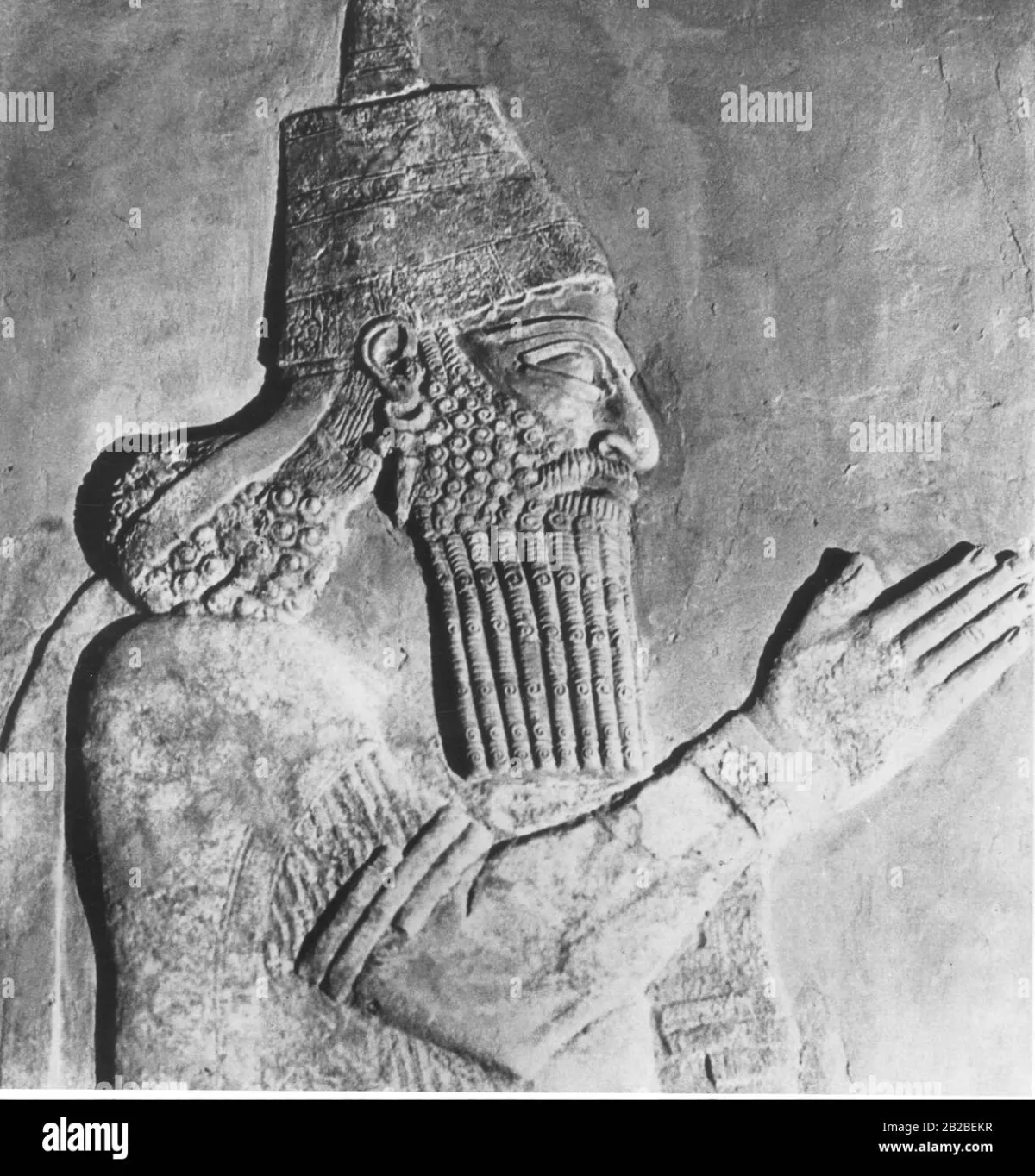 Photo: Sargon II, via c8.alamy.com
This wasn't cruelty—it was statecraft. And it worked so well that variations of this practice echo through five thousand years of recorded history, right up to the present moment.
The Original Insurance Policy
The ancient world understood something modern diplomacy often forgets: treaties are only as strong as the personal stakes of those who sign them. Words on papyrus or parchment could be dismissed as scribal errors or interpreted creatively when circumstances changed. But a prince living in your palace? That was leverage that spoke every language.
The Assyrians perfected this system, but they didn't invent it. Archaeological evidence suggests that as early as 3000 BCE, Mesopotamian city-states were exchanging noble children as part of alliance agreements. The practice spread wherever power met power: Egyptian pharaohs demanded Nubian princes, Chinese emperors collected the sons of tributary states, and Roman generals made a science of identifying which barbarian chieftain's child would make the most effective "guest."
What made this system brilliant wasn't the threat—it was the education. These hostage-heirs weren't imprisoned; they were immersed. They learned the language, customs, and worldview of their captors. Many grew up more loyal to their adopted homeland than their birthplace, creating a generation of leaders who understood both cultures intimately and often preferred the one that had shaped their formative years.
The Roman Refinement
Rome elevated hostage-taking to an art form. The practice became so institutionalized that ambitious barbarian kings began volunteering their sons for Roman education, recognizing that a decade in the capital was the fastest path to understanding—and eventually challenging—Roman power.
Consider Arminius, the Germanic prince who spent his youth in Rome, earned citizenship, and served in the Roman army before returning home to orchestrate the massacre of three Roman legions in the Teutoburg Forest. Rome had created its own most effective enemy by giving him the education to understand Roman weaknesses. Yet the system continued because for every Arminius, there were dozens of foreign princes who returned home as reliable Roman allies.
 Photo: Teutoburg Forest, via farm5.staticflickr.com
 Photo: Arminius, via sevenswords.uk
The psychology was impeccable: how do you rebel against the people who raised you? How do you destroy the city where you learned to read, where you made your first friends, where you discovered philosophy or poetry or the art of governance? The emotional bonds formed during adolescence often proved stronger than blood ties or ethnic loyalty.
Modern Mutations
The practice never disappeared—it simply evolved into forms we no longer recognize as the same phenomenon. Consider the children of foreign diplomats and business leaders attending elite American universities, or the sons and daughters of developing world leaders who spend their formative years in Western boarding schools. The mechanism remains identical: immersion in the dominant culture creates psychological ties that outlast political arrangements.
The International Monetary Fund's structural adjustment programs represent perhaps the most sophisticated version of this ancient practice. Instead of demanding princes, modern powers demand that developing nations send their brightest economic minds to study at Harvard, Chicago, or the London School of Economics. These future finance ministers and central bank governors return home with worldviews shaped by Western economic theory, naturally inclined toward policies that benefit the countries where they learned to think.
Silicon Valley has mastered a variation of this approach. The H-1B visa system and prestigious tech internships function as modern hostage exchanges, drawing the most talented individuals from around the world into American corporate culture. These engineers and entrepreneurs often become more invested in American technological dominance than their countries of origin, creating a brain drain that serves American interests while appearing entirely voluntary.
The Persistence of Human Nature
What makes this practice so enduringly effective is its foundation in unchanging human psychology. We bond with those who shape us during our most impressionable years. We develop loyalty to institutions that invest in our development. We find it psychologically difficult to destroy systems that feel like home, regardless of our rational political calculations.
Modern diplomatic families understand this instinctively. The children of ambassadors, international business executives, and global organization officials grow up as cultural bridges, equally comfortable in multiple worlds but often most loyal to the international system itself rather than any particular nation. They become a transnational class whose interests align with maintaining the global order that created their opportunities.
The Price of Integration
The ancient hostage system revealed a fundamental truth about power: the most effective control isn't physical—it's psychological. You don't need chains when you can shape someone's sense of identity. You don't need threats when you can create genuine affection for your cause.
But this strategy carries inherent risks. Every empire that employed it eventually discovered that their most dangerous enemies were often those they had educated most thoroughly. The foreign princes who understood the system best were also best positioned to exploit its weaknesses.
Today's global elite educational networks face the same paradox. The international students who attend American universities, the foreign executives who work for American companies, and the developing world technocrats trained in Western institutions represent both the greatest strength and the greatest vulnerability of American soft power. They understand the system intimately—which means they also understand how to challenge it effectively.
The Eternal Return
Five thousand years of evidence suggests that wherever power concentrates, it will seek to secure itself by shaping the next generation of potential rivals. The methods evolve—from Assyrian palace schools to Ivy League universities—but the underlying psychology remains constant. We are social creatures who bond with those who invest in our development, and that tendency can be systematically exploited by those who understand it.
The question for any dominant power isn't whether to employ this strategy—human nature makes it nearly inevitable. The question is whether those who benefit from it will recognize that their greatest students may eventually become their most formidable challengers. History suggests they rarely do, which is why the cycle continues: empires educating their successors, one carefully selected child at a time.