From Shadow to Spotlight: The Operational Mind in Democratic Politics
The Recruiter's Perfect Candidate
In 1947, Allen Dulles walked into the newly formed Central Intelligence Agency with a Princeton education and a law degree. By 1961, he was running covert operations that toppled governments. The transition seemed natural enough—until you realize that the same skill set that made him effective at overthrowing foreign democracies would later influence how intelligence veterans approached domestic politics.
 Photo: Allen Dulles, via www.tilestwra.com
The pattern extends far beyond American shores. Vladimir Putin spent seventeen years in the KGB before entering Russian politics. Xi Jinping's rise through China's internal security apparatus preceded his political ascent. In democratic systems from Israel to Britain, former intelligence chiefs routinely transition into elected office or senior political roles. The question isn't whether this happens—it's what it means when it does.
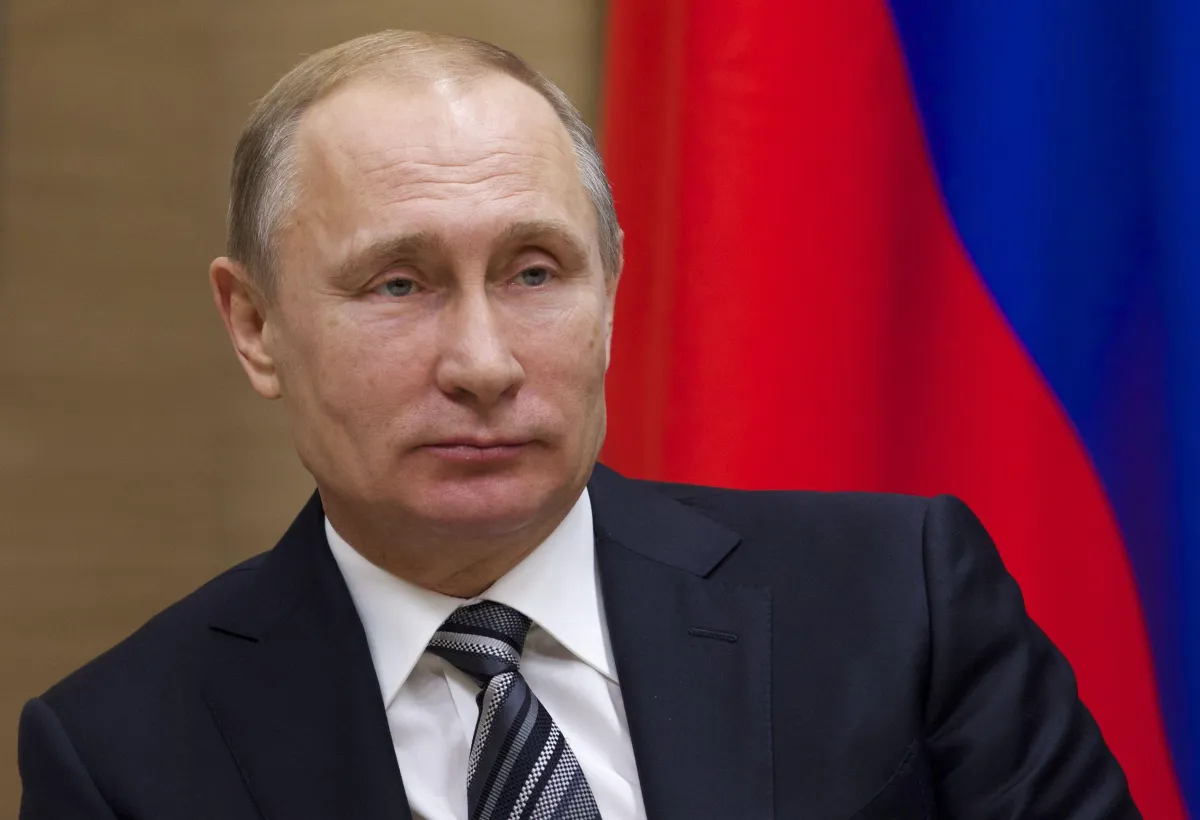 Photo: Vladimir Putin, via wallpapercave.com
The Operational Mindset Meets Electoral Politics
Intelligence work requires a particular psychological profile: the ability to compartmentalize information, maintain multiple identities, and view human relationships as sources to be developed rather than bonds to be honored. These professionals learn to think several moves ahead, to identify pressure points in complex systems, and to achieve objectives through indirect means.
When applied to democratic politics, these skills create advantages that traditional politicians rarely possess. Former intelligence officers excel at opposition research, understand how to build and maintain networks of informants, and approach campaign strategy with the methodical precision of a military operation. They're comfortable with deception as a tool of statecraft and view public opinion as something to be shaped rather than followed.
Consider the career of George H.W. Bush, who directed the CIA before becoming president. His political style reflected operational thinking: careful cultivation of assets, preference for behind-the-scenes maneuvering, and a tendency to view domestic opponents through the lens of national security. This approach served him well in foreign policy but often left him appearing disconnected from ordinary political concerns.
 Photo: George H.W. Bush, via www.map-of-spain.co.uk
The Democracy Paradox
The fundamental tension emerges from a simple fact: intelligence agencies exist to protect democratic systems by operating outside their normal constraints. They lie to foreign powers, manipulate information flows, and work in secrecy—all in service of preserving institutions built on transparency and public accountability.
When intelligence veterans enter politics, they bring this paradox with them. Their instincts favor efficiency over transparency, results over process, and strategic thinking over ideological consistency. These tendencies can strengthen democratic governance by bringing professional competence to political leadership. They can also hollow out democratic norms by treating citizens as targets rather than constituents.
The historical record shows both outcomes. Intelligence veterans have stabilized fragile democracies by applying professional standards to chaotic political environments. They've also systematically undermined democratic institutions by importing operational methodologies into electoral politics.
The Information Advantage
Perhaps nowhere is this dynamic clearer than in how former intelligence officers approach political communication. They understand information warfare in ways that traditional politicians rarely grasp. They know how to seed narratives, exploit cognitive biases, and shape public perception through carefully orchestrated campaigns.
This expertise becomes particularly dangerous in the age of social media, where the tools of foreign influence operations can be easily repurposed for domestic political gain. Former intelligence professionals understand how to use data analytics, psychological profiling, and targeted messaging to influence electoral outcomes—skills that give them enormous advantages over opponents trained in traditional political methods.
The result is a new form of political competition where campaigns increasingly resemble intelligence operations. Opposition research becomes surveillance. Voter outreach becomes psychological manipulation. Political messaging becomes propaganda in the technical sense—information designed to achieve specific behavioral outcomes rather than inform democratic deliberation.
The Institutional Memory Problem
Intelligence agencies possess something that democratic politics often lacks: institutional memory. Career intelligence officers understand how policies play out over decades, not election cycles. They see patterns that escape politicians focused on immediate electoral concerns.
This long-term perspective can benefit democratic governance by bringing strategic coherence to otherwise chaotic political processes. Intelligence veterans often excel at building bipartisan coalitions because they understand that national security transcends partisan politics.
But institutional memory also includes knowledge of how democratic systems can be manipulated. Intelligence professionals know which democratic safeguards are merely ceremonial and which ones actually constrain power. They understand how to work around oversight mechanisms and how to achieve objectives while maintaining plausible deniability.
The Accountability Gap
The most troubling aspect of intelligence veterans in politics may be their relationship with accountability. Intelligence work requires operating in environments where traditional democratic oversight is impossible. Success often depends on maintaining operational security even from elected officials theoretically responsible for oversight.
This mindset doesn't easily adapt to democratic transparency. Former intelligence officers often struggle with the expectation that their decisions should be subject to public scrutiny. They're trained to view information as a weapon to be controlled, not a public good to be shared.
The result is political leadership that operates with unprecedented opacity, even within democratic systems nominally committed to transparency. Intelligence veterans in politics often maintain networks of former colleagues, creating informal power structures that exist parallel to official democratic institutions.
The Historical Verdict
Five thousand years of political history suggest that specialized knowledge always seeks political expression. Military commanders become warlords. Religious leaders become theocrats. Merchants become plutocrats. The pattern is so consistent that it functions almost as a law of political physics.
Intelligence professionals entering politics represents the latest iteration of this eternal dynamic. Their specialized knowledge of how power actually operates gives them advantages that traditional democratic politics wasn't designed to handle. Whether this strengthens or weakens democratic systems depends largely on the character of the individuals involved and the strength of the institutions they encounter.
What seems clear is that democratic systems will need to evolve new forms of oversight and accountability to handle political leaders trained in the arts of deception and manipulation. The alternative is discovering too late that the people trained to protect democracy have learned to game it instead.