The Price of Peace: How Ruling Classes Master the Art of Strategic Generosity
The Fundamental Calculation
Every ruling class eventually confronts the same arithmetic problem: there are always more of them than there are of us. This basic demographic reality has shaped political strategy for five millennia, creating a remarkably consistent playbook for managing popular discontent. The solutions vary in their packaging—bread distributions, tax relief, land grants, infrastructure projects, direct cash payments—but the underlying logic remains unchanged.
What modern democracies call social programs, ancient Romans called "bread and circuses." What medieval lords provided through feast days and debt forgiveness, contemporary governments deliver through stimulus checks and tax credits. The technology of transfer evolves, but the strategic calculation stays constant: it's cheaper to buy compliance than to enforce it through violence.
Understanding this pattern reveals something crucial about power dynamics that transcends specific political systems. The deal isn't evidence of elite benevolence—it's proof of elite mathematics. When the cost of maintaining order through force exceeds the cost of purchasing it through redistribution, smart rulers choose redistribution.
The Roman Formula
Rome perfected the buyout model through centuries of trial and error. The grain dole (annona) that fed roughly 200,000 citizens by the late Republic wasn't charity—it was insurance against revolution. Politicians who proposed reducing the distributions faced riots; those who expanded them won elections. The system created a feedback loop that made generosity politically mandatory.
The genius of the Roman approach lay in its systematic nature. Rather than responding to each crisis with ad hoc payments, they institutionalized redistribution through regular distributions, public games, and massive construction projects that provided employment. The Colosseum wasn't built to glorify emperors—it was built to keep 50,000 potentially dangerous men occupied for entire afternoons.
Emperor Augustus codified this strategy into a science of social control. His res gestae (record of achievements) reads like a modern government budget: grain distributions to 250,000 citizens, cash bonuses to soldiers, public works projects employing thousands of workers, gladiatorial games featuring 10,000 fighters. Each expenditure served multiple purposes—demonstrating imperial generosity, providing economic stimulus, and channeling popular energy into harmless entertainment.
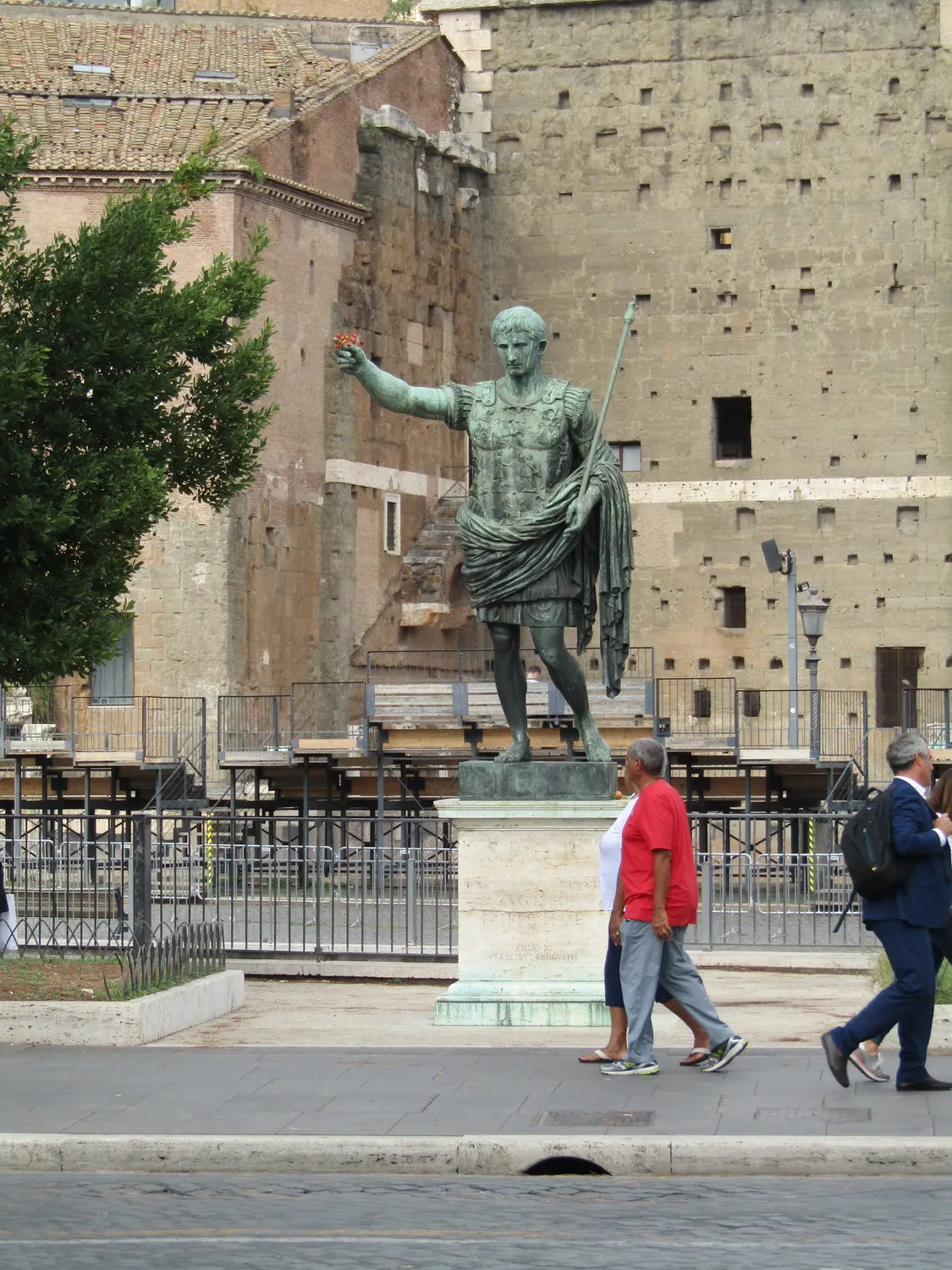 Photo: Emperor Augustus, via photos.wikimapia.org
The system worked so well that it became impossible to dismantle. Emperors who attempted to reduce distributions faced immediate unrest. The mob that could make or break political careers had been transformed into a dependent constituency that demanded ever-greater benefits. What began as a strategic calculation became a structural requirement.
Medieval Innovations
Feudal Europe adapted the Roman model to different economic conditions. Since cash was scarce and trade limited, medieval lords bought loyalty through land grants, debt forgiveness, and elaborate festivals that demonstrated their wealth while sharing it strategically. The great feasts that marked religious holidays served the same function as Roman grain distributions—they prevented hunger from becoming rebellion.
The Domesday Book reveals the sophistication of Norman redistribution strategies. William the Conqueror didn't simply seize English land—he redistributed it systematically to create new stakeholder classes. Former Saxon nobles who submitted received smaller holdings that maintained their status while ensuring their dependence. Common soldiers who had fought at Hastings received farms that transformed potential troublemakers into property-owning conservatives.
 Photo: William the Conqueror, via hicoop.b-cdn.net
Medieval guilds represented another innovation in elite-sponsored social control. By granting exclusive trading privileges to organized craftsmen, rulers created middle-class constituencies with vested interests in maintaining the existing order. Guild members received protection from foreign competition and internal price-cutting in exchange for political loyalty and social stability.
The periodic debt forgiveness that marked royal jubilees followed identical logic. Rather than allowing economic pressure to build toward revolution, smart monarchs regularly reset the system through strategic amnesty. Peasants who might otherwise join rebellions instead waited hopefully for the next royal celebration.
The Democratic Refinement
Modern democracies have industrialized the ancient buyout model through sophisticated fiscal and monetary policy. What Roman emperors accomplished through direct distribution, contemporary governments achieve through progressive taxation, social insurance, and macroeconomic management. The tools have evolved, but the fundamental strategy remains unchanged.
The New Deal represented the most systematic application of this approach in American history. Franklin Roosevelt's alphabet soup of programs—CCC, WPA, Social Security, unemployment insurance—wasn't revolutionary socialism but strategic capitalism. Faced with genuine revolutionary potential during the Great Depression, American elites chose redistribution over revolution.
The political genius of New Deal programs lay in their design. Rather than simple welfare payments that might breed dependency, they provided work, training, and long-term security that created new stakeholder classes. Social Security transformed elderly Americans from potential radicals into conservative defenders of government programs. The GI Bill turned returning veterans into college-educated homeowners with investments in the existing system.
European social democracy perfected this model through comprehensive welfare states that eliminated most sources of revolutionary grievance. Universal healthcare, free education, generous unemployment benefits, and pension systems that guarantee comfortable retirement don't represent socialist victory—they represent capitalist adaptation. By socializing risk while preserving private ownership of productive assets, European elites purchased social peace at remarkably low cost.
The Digital Age Acceleration
Technology has dramatically reduced the transaction costs of elite generosity while expanding its reach and precision. Direct deposit transforms stimulus distribution from a bureaucratic nightmare into a simple database operation. Digital payment systems allow governments to target specific demographics with surgical precision. Social media enables real-time monitoring of public mood and rapid response to emerging discontent.
The COVID-19 pandemic demonstrated the modern state's capacity for rapid wealth transfer when circumstances demand it. Within weeks, governments worldwide implemented direct cash payments, expanded unemployment benefits, and suspended normal fiscal constraints. The speed and scale of these interventions would have been impossible before digital infrastructure made mass payments technologically trivial.
Central bank policy represents the most sophisticated evolution of ancient redistribution strategies. Rather than directly distributing money, modern elites manipulate asset prices through monetary policy that benefits different constituencies in calculated ways. Low interest rates inflate stock markets and real estate values, benefiting property owners. Quantitative easing provides indirect stimulus through financial institutions. The complexity obscures the redistribution while making it more politically sustainable.
Cryptocurrency and digital payment platforms promise even greater precision in future buyout strategies. Programmable money could enable automatic redistribution triggered by specific economic conditions. Universal Basic Income pilots worldwide test direct cash payment systems that could replace traditional welfare bureaucracies with algorithmic distribution.
When the Deal Breaks Down
The buyout strategy fails when elites either cannot afford the payments or refuse to make them. History's great revolutions typically occur not during periods of absolute deprivation but when existing redistribution systems break down or prove inadequate to changing conditions.
The French Revolution began when fiscal crisis prevented the monarchy from maintaining traditional elite privileges while expanding benefits to new constituencies. The Russian Revolution occurred when military defeat made continued redistribution impossible while creating new demands for resources. The Arab Spring erupted when economic stagnation reduced governments' capacity for strategic generosity while educated populations expected greater benefits.
Venezuela's recent collapse illustrates how resource-rich societies can still fail when redistribution becomes economically unsustainable. Hugo Chávez's Bolivarian revolution represented a classic buyout strategy—using oil revenues to fund massive social programs that purchased political loyalty. When oil prices fell and economic mismanagement reduced available resources, the system collapsed into hyperinflation and authoritarian repression.
The American opioid crisis suggests another form of buyout failure—when redistribution takes forms that ultimately undermine social stability. Economic despair in post-industrial communities created demand for chemical escape that elites initially ignored. When pharmaceutical companies provided that escape through legal drug distribution, they inadvertently created new forms of social breakdown that traditional redistribution couldn't address.
The Mathematics of Survival
Elite generosity isn't generosity—it's actuarial calculation. Smart ruling classes understand that revolution is always more expensive than redistribution. The cost of maintaining armies, building fortifications, and suppressing unrest exceeds the price of strategic welfare programs by orders of magnitude.
This calculation explains why the most successful elite strategies involve expanding rather than restricting redistribution over time. Each new program creates new constituencies with vested interests in system preservation. Each benefit that becomes "earned" or "universal" generates more political support than targeted welfare that stigmatizes recipients.
The pattern suggests that contemporary debates about inequality and redistribution will resolve according to the same logic that has operated for millennia. When social pressure reaches levels that threaten stability, elites will choose strategic generosity over systematic resistance. The only questions are timing, scale, and delivery mechanisms.
Modern technology makes the ancient deal more efficient but not fundamentally different. Whether delivered through grain ships or digital transfers, Roman circuses or streaming entertainment, medieval feast days or national holidays, the transaction remains the same: economic benefits in exchange for political compliance.
The price of peace continues to be whatever elites calculate they can afford to pay. History suggests they usually calculate correctly—until they don't.