The Ledger Never Forgets: What Babylon's Clay Tablets Predict About Your Phone
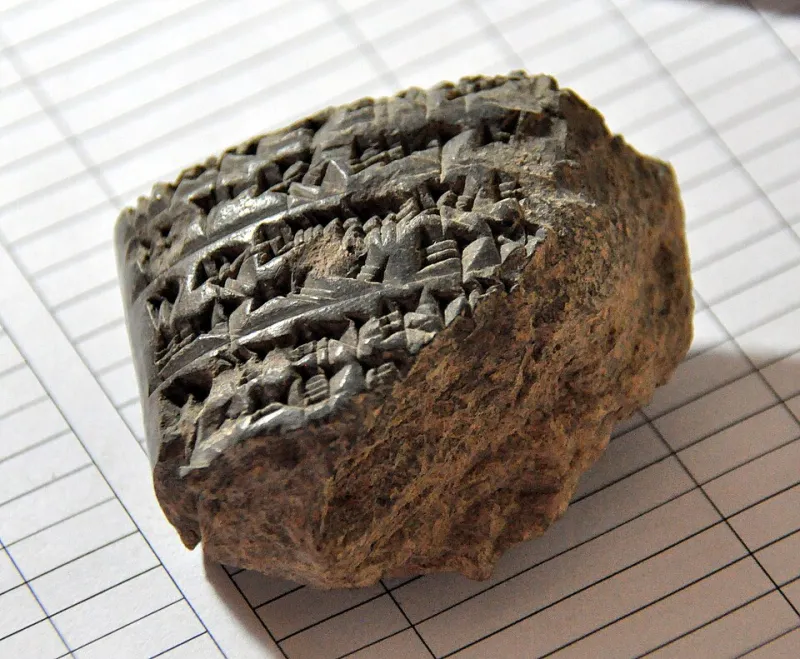
Photo: Osama Shukir Muhammed Amin FRCP(Glasg), CC BY-SA 4.0, via Wikimedia Commons
Somewhere in the British Museum sits a clay tablet, roughly four thousand years old, listing households, heads of cattle, and quantities of grain in a Sumerian district. It is, functionally, a spreadsheet. It is also the ancestor of every government database now operating on Earth, and it encodes the same bargain that your phone's terms of service encode today: tell us who you are, and things will go more smoothly for you.
The Scribe's Dual Purpose
The earliest censuses were administrative necessities. You cannot tax what you have not counted. You cannot feed a city without knowing how many mouths it holds. You cannot conscript an army from a population you cannot enumerate. Babylonian scribes, Egyptian officials tallying the Nile's harvest, Han dynasty registrars counting households — all were performing the unglamorous arithmetic of survival.
But the record is equally clear about the second use, and the second use arrives with suspicious speed in every case. The same list that distributed grain during famine identified dissidents during unrest. The same registry that enabled taxation enabled persecution. When the Book of Numbers describes a census, it also describes the divine displeasure it provoked — an ancient memory, preserved in scripture, that being counted is not always a neutral act.
The Domesday Precedent
England's Domesday Book of 1086 made the tension explicit. William the Conqueror commissioned a comprehensive survey of every holding in his new kingdom — who owned what, what it was worth, what it owed. The Anglo-Saxon Chronicle records that the survey was resented with a specificity of grievance that reads almost modern: the chronicler notes it was shameful to even describe how the king's men questioned people, and not even a single ox was omitted.
The English did not stop being surveyed afterward. They simply stopped being surprised. That, too, is a recurring pattern in the data.
The Ledger Goes Industrial
The modern surveillance economy is the scribe's ledger at industrial scale, with one critical difference: the scribes needed to walk door to door, and the ledger now walks itself. Your location data, purchase history, search queries, and social graph constitute a census more detailed than anything the Han registrars or Norman commissioners could have imagined — assembled not by a state, initially, but by commercial entities, then purchased or subpoenaed by states when convenient.
Here the opinion of this publication must be stated plainly: the trade of convenience for exposure is a bad trade that humans have never once refused. The Babylonian farmer gave his household count in exchange for grain allotments. The American consumer gives their entire behavioral profile in exchange for two-day shipping and a map that knows the route home. In four thousand years, the terms have improved for the counter and worsened for the counted, and the transaction has closed every single time.
What the Ledger Cannot Do
There is one consolation in the historical record, and it should not be overlooked. Every census ever kept has eventually become obsolete, misfiled, or overthrown. The Domesday Book is a museum piece. The Han registries are fragments. The surveillance apparatus of the Stasi, arguably the most complete ever built, is a museum in Berlin where tourists photograph the filing cabinets.
The ledger never forgets, but the ledger does not rule by itself. It requires an administrator, a warrant, a political system willing to use it. The five-thousand-year record suggests the counting will never stop — but it also suggests that whether the count becomes a tool of provision or a tool of persecution depends entirely on the institutions holding the pen. Americans, currently writing the most detailed ledger in human history, would do well to remember that the scribes of Babylon never imagined their tablets would outlive the empire. The data always does. The question is what the data's heirs will do with it.