The Recorded Word as Executioner: How Leaders Have Always Been Destroyed by Their Own Archives
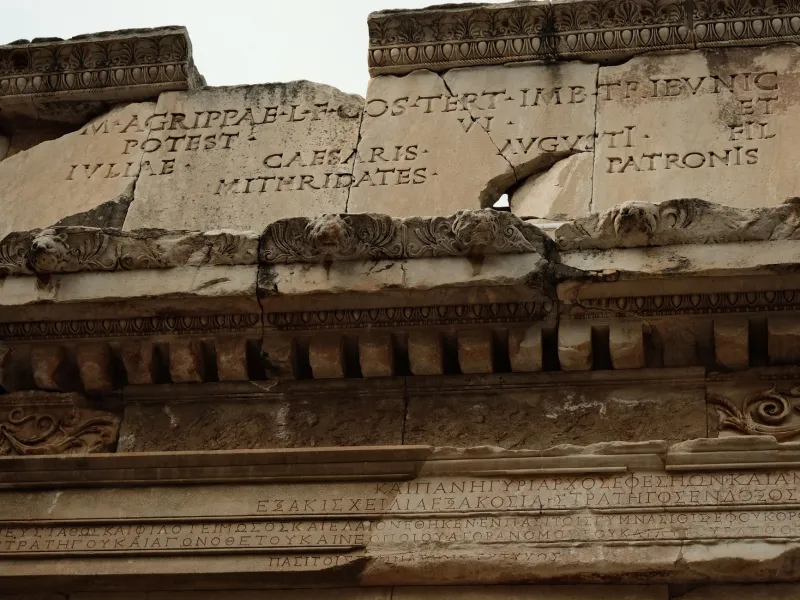
There is a particular species of political destruction that requires no opponent, no scandal, and no act of misconduct. It requires only a record. The leader speaks. Someone writes it down. Years pass. Circumstances change. The written words remain exactly as they were, and suddenly the leader is standing trial before a jury composed entirely of their own prior self.
This is among the oldest political traps in human civilization, and also among the least understood. We tend to treat it as a problem created by modern technology—by the twenty-four-hour news cycle, by searchable video archives, by social media posts that never fully disappear. In fact, the technology has only accelerated a dynamic that has been operating since the first political leader thought it wise to have their promises carved in stone.
The King Who Couldn't Unsay It
The earliest written legal codes were, among other things, acts of political theater. When Hammurabi commissioned his famous stele around 1754 BCE—a black diorite column nearly eight feet tall, inscribed with 282 laws and erected in a public space where any literate subject could read it—he was making a claim about his own character and authority. He was, the inscription announced, a king of justice, appointed by the gods to bring righteousness to the land.
That claim was politically useful precisely because it was public and permanent. It also created a constraint. A king who had declared himself the guarantor of widows and orphans could not, without severe political cost, be seen acting against widows and orphans. The monument that celebrated his authority also circumscribed it. He had, in the most literal sense, written himself into a corner.
This pattern—the public declaration that becomes a political prison—repeats throughout the ancient record with such consistency that it begins to look less like a series of individual miscalculations and more like a structural feature of how power and language interact.
Why Leaders Keep Making the Same Mistake
The explanation lies in a psychological asymmetry that has characterized human political behavior across every era we can study. At the moment a declaration is made, the benefits are immediate and concrete: the declaration signals strength, builds coalitions, motivates supporters, and draws a contrast with opponents. The costs are abstract and distant: the declaration may, someday, in circumstances that cannot yet be fully imagined, become inconvenient.
Human beings are not well designed to give adequate weight to abstract future costs when weighed against concrete present benefits. This is not a character flaw. It is a feature of how our cognition works, and it has been consistent across every culture and century that has left us a record. The Roman senator who made sweeping promises to the mob, the medieval monarch who issued charters of rights under duress, the revolutionary who published manifestos about the sovereignty of the people—all of them were responding rationally to the political pressures of their immediate moment. All of them were creating documents that would later be used against them or their successors.
The Charter Problem
The history of constitutional governance is, in significant part, a history of leaders being bound by documents they or their predecessors created under pressure and later found inconvenient.
King John of England signed Magna Carta in 1215 under military compulsion, almost certainly intending to honor it only as long as he had to. He died the following year while fighting a civil war to escape its constraints. His successors spent the next several centuries in an ongoing negotiation with a document that kept reasserting itself whenever the monarchy overreached. The charter had a life that its author never intended to give it.
This is the dynamic that makes recorded political commitments so dangerous: they acquire constituencies. Once a document exists and becomes part of the political culture, groups form around it, interpret it, and invest their identities in its preservation. The original author's intentions become irrelevant. The words stand independent of the mind that produced them.
The American Dimension
The United States was founded, in part, by men who understood this dynamic exceptionally well and chose to exploit it deliberately. The Declaration of Independence was not merely a statement of political philosophy. It was a rhetorical trap—a set of principles so broadly stated that they could be turned against any government, including the one that issued them, the moment that government failed to honor them.
Abraham Lincoln understood this when he invoked the Declaration against the institution of slavery. Suffragists understood it when they pointed out that "all men are created equal" had yet to be applied with any consistency. Civil rights leaders understood it when they held American rhetoric up against American practice and let the contradiction speak for itself.
The founding generation created the most politically consequential archive in American history, and they did so knowing that future generations would use it in ways they could not fully anticipate. That was, to a significant degree, the point.
When the Archive Becomes a Weapon
What technology has changed is not the fundamental dynamic but its tempo and its reach. For most of human history, the problem of prior statements was largely confined to formal, public declarations—inscriptions, charters, published pamphlets. The ordinary political conversation, the private letter, the speech to a local audience, existed in a much more forgiving medium. Memory is imperfect. Copies are incomplete. Witnesses disagree.
The combination of mass media and digital archiving has eliminated most of that forgiveness. A statement made on a cable news program in 2003 is as retrievable today as it was the morning after broadcast. A tweet posted in 2011 exists in searchable form regardless of whether its author deleted it. A floor speech from a legislative session twenty years ago is indexed and keyword-searchable.
This means that the archive problem, which once primarily afflicted formal declarations and constitutional documents, now attaches to the entire career of anyone who has spent more than a few years in public life. Every position taken, every coalition joined, every compromise accepted has been recorded, and the record is available to anyone with a search engine and a political motive.
The Adaptation That Hasn't Worked
The political response to this reality has been, on the whole, to speak in ways that resist clear interpretation—to become deliberately vague, to deploy language that sounds like commitment without actually constituting one, to answer questions with formulations carefully designed to be deniable from multiple directions.
This adaptation has not solved the problem. It has simply changed its character. Where prior generations of leaders were destroyed by the specificity of their recorded promises, contemporary leaders are increasingly destroyed by the perceived dishonesty of their deliberate vagueness. The audience has learned to recognize the evasion, and the recognition produces its own form of political damage.
Five thousand years of recorded political speech suggests there is no clean solution to this problem. The leader who says nothing specific cannot be held to a specific promise, but also cannot build the trust that political authority requires. The leader who makes specific commitments builds trust in the short term and creates vulnerabilities in the long term. The record is always there, and it is always, eventually, consulted.