The Borrowed Hammer: How the Tools of One Era's Crisis Become the Weapons of the Next Era's Tyranny
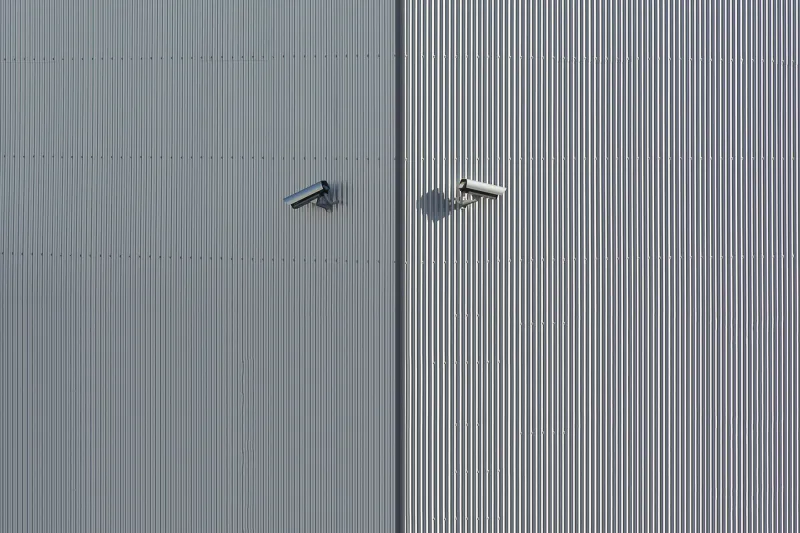
In 212 CE, the Roman emperor Caracalla extended citizenship to virtually every free inhabitant of the empire. Scholars have debated his motives ever since, but the fiscal logic is straightforward: citizenship carried with it the obligation to pay inheritance taxes, and the treasury needed revenue. The administrative apparatus required to track, assess, and collect those taxes from a population that now stretched from Scotland to Mesopotamia was extraordinary in its ambition—a surveillance and documentation infrastructure that had no precedent in the ancient world.
Caracalla was dead within a year, assassinated by his own soldiers. The administrative apparatus was not. It outlasted him by centuries, serving purposes he had never contemplated, wielded by successors who had no stake in the original justification for its creation.
This is the pattern. It has not changed.
The Architecture of Emergency
State power is not built in tranquility. The great expansions of governmental capacity—the ones that leave permanent marks on how societies are organized and controlled—almost universally occur during crises: wars, plagues, economic collapses, security emergencies. The crisis provides both the justification for expansion and the political cover to override the objections of those who might otherwise resist it. Who can argue against necessity?
The problem is structural. Crises end. Institutions do not. The bureaucracies, surveillance systems, legal authorities, and administrative frameworks created to address an emergency develop, almost immediately, constituencies with an interest in their perpetuation. The officials who staff them have careers. The contractors who supply them have contracts. The legislators who authorized them have claimed credit for the security they provide. Dismantling the apparatus means asking all of these actors to voluntarily surrender something of value—and that is not how institutions behave.
The Roman example is instructive precisely because it is so distant from our own moment. The census and taxation infrastructure built across the late Republic and early Empire was justified, each time it was expanded, by specific and genuine fiscal needs. No single emperor sat down to design a comprehensive surveillance state. Each addition seemed reasonable in isolation. The cumulative result was a documentation and monitoring system of remarkable reach, one that later emperors—including some with ambitions their predecessors would have found alarming—inherited as a going concern and turned to their own purposes.
The Inheritance Problem
The critical variable is not the intent of the builder but the intent of the inheritor. This distinction is consistently underweighted in political debates about state power, which tend to focus on whether the current leader can be trusted with a particular capability. The historical question is different: can every future leader who will ever hold this capability be trusted with it?
The answer, across five thousand years, is reliably no.
The Star Chamber in England offers a compact illustration. Established in the late fifteenth century as a genuinely reformist institution—a court designed to provide justice for those who could not obtain it through ordinary channels, and to restrain the power of nobles who might intimidate local juries—it functioned for generations as something close to its original purpose. By the early seventeenth century, under Stuart monarchs with different priorities, it had become the instrument of choice for suppressing political opposition. The architecture was the same. The purpose had inverted.
No one who authorized the Star Chamber in 1487 intended to build a tool of political repression. They built what they needed for their moment. Their successors found it useful for a different moment, and for different reasons.
The Digital Inheritance
The United States built, in the years following September 2001, the most sophisticated domestic and international surveillance infrastructure in human history. The legal authorities, the technical systems, the institutional relationships between intelligence agencies and private telecommunications companies—all of it was constructed rapidly, under conditions of genuine emergency, with the explicit justification that the threat demanded extraordinary measures.
The architects of that system were not, in the main, acting in bad faith. They faced a real threat and built tools to address it. But they also created an inheritance. Every administration since has received that inheritance, and the historical pattern suggests that the question of how future administrations will use it is not settled by the intentions of the people who built it.
This is not a partisan observation. The surveillance infrastructure built under one administration was available to the next, and the next, and the next, regardless of which party held power or what commitments had been made during campaigns. The apparatus does not change with the election. It waits.
The same observation applies to the expansion of executive emergency powers, to the legal precedents established for indefinite detention, to the data-collection relationships between federal agencies and private platforms. Each was built for a specific purpose by specific people who had specific justifications. Each is now available for purposes that were never contemplated by its architects.
The Bureaucracy's Own Interests
One feature of this pattern that the historical record emphasizes is the role of the institutional apparatus itself—not as a passive tool but as an active participant in its own preservation and expansion. Bureaucracies do not simply wait to be used; they develop cultures, interests, and internal logics that shape how they respond to changing political environments.
The Tokugawa shogunate's censorship apparatus, originally constructed to suppress Christian missionary activity in seventeenth-century Japan, did not dissolve when the missionary threat diminished. It adapted, finding new categories of dangerous material to suppress, new justifications for its continued existence, new patrons within the political system who found its capabilities useful. The original purpose became, over time, almost incidental to the institution's actual function.
Modern administrative agencies exhibit the same tendency. Regulatory bodies created to address specific market failures develop institutional cultures, legal interpretations, and political relationships that ensure their survival long after the original market failure has been addressed, transformed, or forgotten. This is not corruption. It is institutional self-preservation, and it is as old as institutions.
The Question the Founders Could Not Answer
The American constitutional tradition has grappled with this problem more explicitly than most, in part because the founders were themselves students of history and understood the pattern. The separation of powers, the Bill of Rights, the system of checks and balances—these were all, in part, attempts to build structural resistance to the tendency of emergency powers to become permanent features.
They worked, imperfectly, for a long time. But the Constitution's architects could not anticipate every crisis, and they could not prevent future generations from building, in response to those crises, apparatuses that the constitutional structure was not designed to constrain. The tools of the twentieth and twenty-first centuries—administrative agencies with quasi-legislative authority, surveillance systems operating at speeds no court can match, data infrastructure whose legal status remains genuinely contested—exist in a space that the founders' framework was not built to address.
This is not a failure of the founders. It is a feature of the problem. Every generation builds for its own emergencies. Every generation's emergencies become the next generation's inheritance.
What the Record Shows
The consistent finding across five thousand years of state-building is this: the question to ask about any expansion of state power is not whether the current holders of that power are trustworthy. It is whether the apparatus being built is one that can be safely wielded by the least trustworthy leader who will ever hold it.
History suggests that leader is always coming. The apparatus will be waiting.