Canceled Before the Internet: The Ancient Art of Destroying Someone Publicly and Feeling Righteous About It
Canceled Before the Internet: The Ancient Art of Destroying Someone Publicly and Feeling Righteous About It
Every few years, someone publishes a think piece arguing that social media has created a uniquely dangerous new phenomenon — the mass public pile-on, the reputation-destroying information cascade, the coordinated campaign to make someone unemployable by Tuesday. These pieces are usually well-intentioned. They are also, to anyone who has spent time with the historical record, almost cosmically ahistorical.
Human beings have been organizing collective punishment campaigns against perceived social violators for as long as human beings have been organized. The mechanism is not an algorithm. It is a psychology. And the psychology is old enough that the Greeks had a word for it, a formal procedure for it, and a six-thousand-piece pottery shard collection to prove it.
The Athenians Had a Voting System Specifically for This
Ostracism — the practice from which we get the modern word — was not an informal social process. It was a constitutional one. Once a year, the Athenian assembly voted on whether to hold an ostracism. If enough citizens agreed that yes, this year warranted one, a second vote was held in which each citizen wrote a name on a piece of broken pottery called an ostrakon. The person who received the most votes — provided the total exceeded a minimum threshold — was expelled from Athens for ten years. No trial. No formal charges. No right of appeal.
The official justification was civic hygiene: ostracism existed to remove figures who had become dangerously powerful or divisive. In practice, it was used against people who had become annoying to enough of their fellow citizens at the right moment in time.
Consider Aristides, known to history as "the Just" — a nickname that tells you something about his reputation and, perhaps, also about why he was ostracized in 482 BC. According to Plutarch, a farmer who couldn't read approached Aristides on ostracism day and asked him to write the name "Aristides" on his shard. Aristides asked if the man had any grievance against him. The farmer said no, he just found it irritating that everyone called him "the Just" all the time. Aristides wrote his own name on the shard and handed it back.
He was exiled anyway. The Athenians recalled him a few years later when they needed his military judgment against the Persians, which suggests that the whole enterprise had less to do with justice than with the periodic social need to cut down whoever was standing tallest.
Rome: They Didn't Just Cancel You. They Erased You.
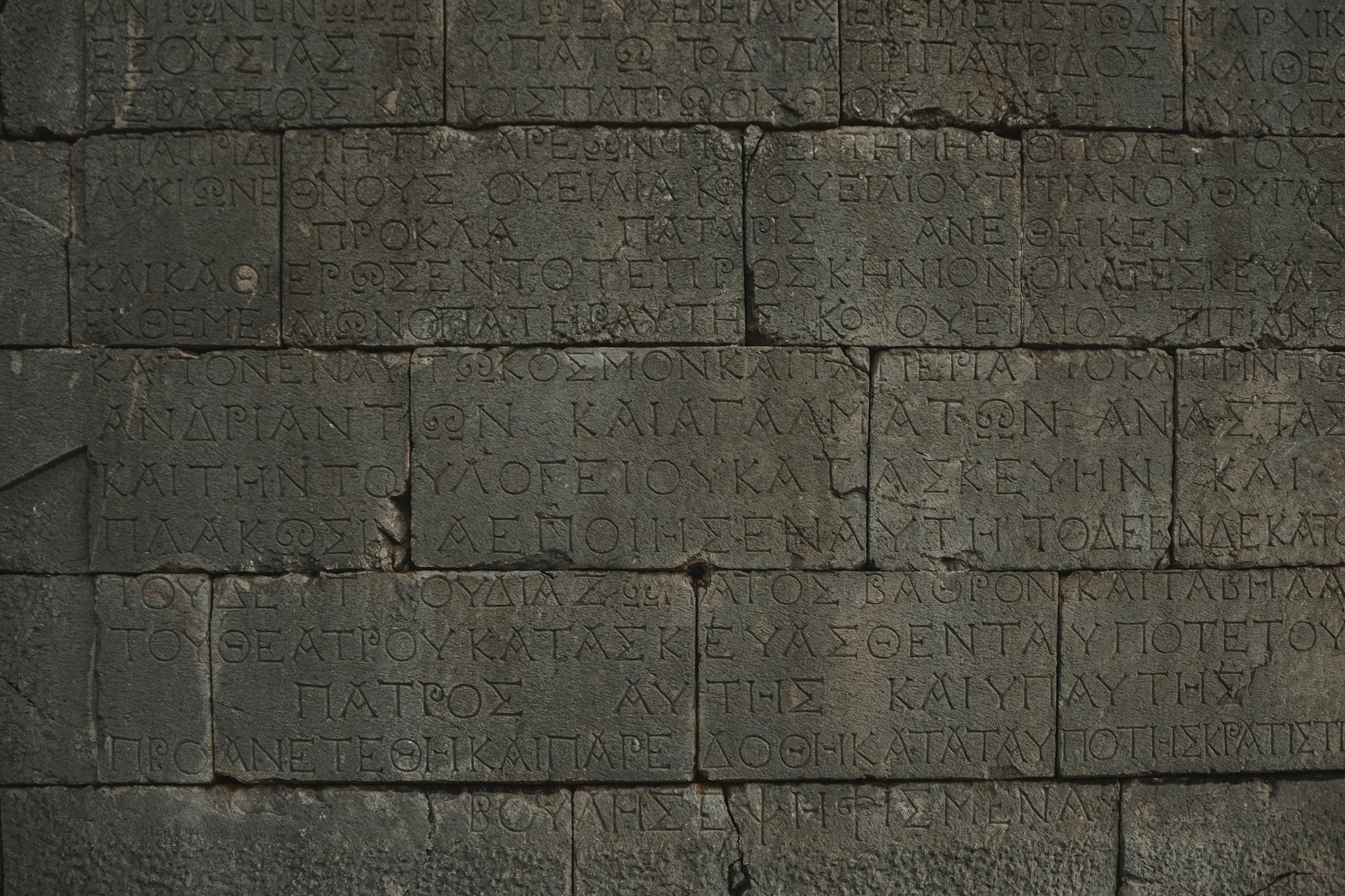
The Romans, characteristically, took the concept further and gave it a more impressive Latin name. Damnatio memoriae — condemnation of memory — was the Senate's mechanism for declaring that a person had not merely done wrong but had ceased, retroactively, to have existed in any meaningful sense. The condemned's statues were pulled down. Their name was chiseled off public inscriptions, off buildings they had commissioned, off their own family monuments. Their image was removed from coins where possible. In extreme cases, it was illegal to speak their name in public.
The emperor Domitian, who was by most accounts a genuinely unpleasant ruler, received a thorough damnatio after his assassination in 96 AD. So did Commodus, Caracalla, and Geta — the last of whom was killed by his brother Caracalla in a room where their mother was present, which is the kind of detail that history preserves to remind you that the past was not a simpler time.
What makes the Roman case instructive is how selective and politically motivated the process was. Damnatio memoriae was not applied to rulers who had been bad — Rome had plenty of those and did not erase them all. It was applied to rulers who had lost, who had no remaining faction to protect their memory, and whose erasure served the interests of whoever currently held power. It was reputation destruction as political housekeeping, dressed in the language of moral necessity.
The Senate that voted these condemnations was the same Senate that had, in most cases, enthusiastically supported the condemned ruler while he was alive and in a position to reward them for doing so. This pattern — enthusiastic association followed by performative condemnation once the wind shifted — will be familiar to anyone who has watched a modern media cycle closely.
The Pamphlet Wars: Going Viral at the Speed of a Printing Press
For a genuinely entertaining example of pre-digital reputation destruction, the pamphlet wars of 18th-century Britain and colonial America deserve more attention than they typically receive outside of academic history departments.
The mechanics were straightforward. A pamphlet cost almost nothing to print, could be produced overnight, was usually anonymous or pseudonymous, and could be distributed through coffee houses, taverns, and street vendors to a literate urban population that consumed them with the same compulsive appetite that their descendants would later apply to Twitter threads. A skilled pamphleter could, within a week, take a public figure from respected to radioactive.
John Wilkes, the 18th-century British politician and professional provocateur, understood this better than almost anyone. His publication The North Briton — particularly Issue No. 45, published in 1763 — attacked King George III's government with a directness that resulted in his arrest, his expulsion from Parliament, his exile to France, and his eventual return to England as a popular hero, because the government's overreaction had made him more famous than the pamphlet alone ever could have. The attempt to suppress the information cascade amplified it. This is also not a new pattern.
On the American side, the pamphlet wars surrounding the Revolution produced casualties that history has largely forgotten. Benjamin Franklin's son William, the Royal Governor of New Jersey and a loyalist, was subjected to a pamphlet campaign so effective that his reputation was destroyed not just in his own time but in the historical record — he is remembered today almost entirely as the man who chose the wrong side, despite having been, by contemporary accounts, a competent and relatively humane administrator. The pamphlets won. The complexity lost.
The Constant, Beneath the Technology
Strip away the pottery shards, the chisels, the printing presses, and the notification algorithms, and the underlying structure of every one of these episodes is identical. A community identifies someone as a violator of its values — or, more precisely, as someone whose destruction will be socially rewarding to enough people at a particular moment. The community coordinates, using whatever information technology is currently available, to concentrate reputational damage on that individual. The process feels like justice from the inside. It produces outcomes that are, at best, loosely correlated with anything resembling proportionality.
The Athenian who voted to exile Aristides because the man's reputation for virtue was irritating was not a uniquely petty person. He was a person operating on a psychology that is thoroughly documented across fifty centuries of recorded human behavior. The Roman senator who enthusiastically chiseled his former patron's name off a monument was not a uniquely cynical person. He was a person who understood which way the information environment was currently flowing.
None of this is an argument for or against any particular contemporary case. The historical record is not a verdict on the present. It is, however, a useful corrective to the idea that we are doing something new — that the technology has created the appetite, rather than simply giving the appetite a faster horse.
We have always been this. The pottery is just older.