The Currency Always Dies Last: What Five Empires Knew Before Their Citizens Did
The Currency Always Dies Last: What Five Empires Knew Before Their Citizens Did
There is a particular kind of optimism that attaches itself to the idea that a government can spend its way out of a problem it spent its way into. It is not a new optimism. It is, in fact, one of the oldest recurring convictions in the entire record of organized civilization — and it has been tested, repeatedly, across cultures that shared no language, no religion, and no knowledge of one another. The results of those tests are available to anyone willing to look.
This is not a prediction. It is an inventory.
Rome: The Slow Bleed of the Denarius
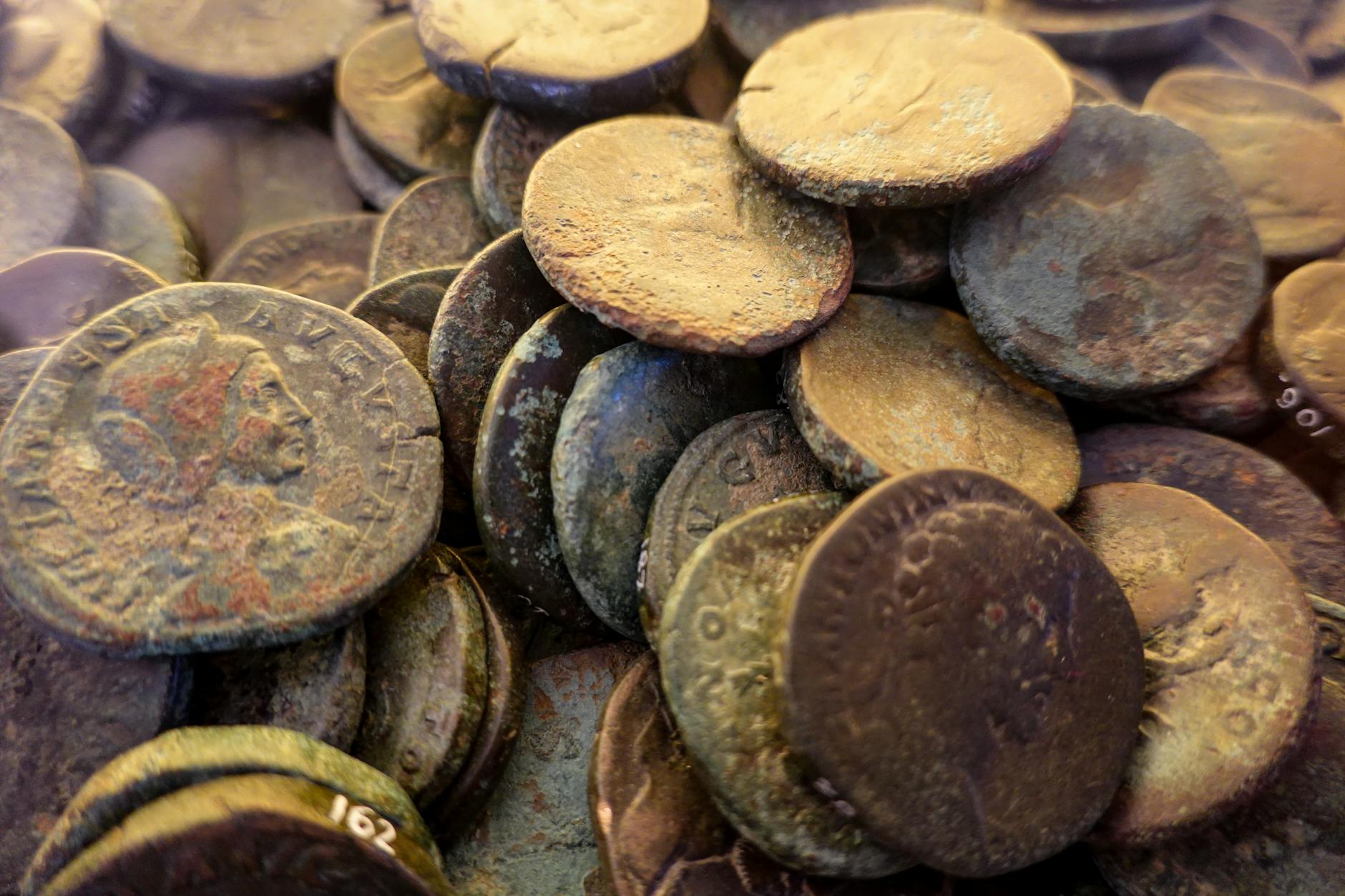
At its peak, the Roman denarius was approximately 90 percent silver. By the reign of Gallienus in the third century AD, it was closer to 2 percent. The degradation did not happen overnight. It accumulated across generations of emperors who faced the same arithmetic: the cost of the legions, the cost of the bureaucracy, the cost of bread and circuses, all exceeded what taxation could honestly cover. The gap was filled by shaving, clipping, and eventually replacing silver with silver-washed bronze.
Roman merchants were not stupid. They noticed the coins felt lighter, looked duller, and bought less grain than they once had. Prices adjusted. By the 260s AD, the Roman economy was experiencing what modern historians recognize as a textbook inflationary spiral — wages demanded in kind rather than coin, long-distance trade contracting, and the state itself refusing its own currency for certain tax payments, preferring grain and labor instead.
Diocletian attempted a fix in 301 AD with the Edict on Maximum Prices, a comprehensive price control covering everything from wheat to a lawyer's fee. Merchants responded by withdrawing goods from the market rather than selling at a loss. The edict collapsed within a decade. The underlying monetary problem did not.
Ming China: Paper's First Great Failure
The Ming Dynasty inherited the world's first sophisticated paper currency system from the Yuan, and within a generation had demonstrated precisely why that sophistication was dangerous in undisciplined hands. The Hongwu Emperor issued the Dàmíng Bǎochāo — Great Ming Treasure Note — in 1375, backed by nothing more formal than imperial decree. No convertibility to metal was guaranteed. No limit on issuance was enforced.
Within fifty years, the notes had lost roughly 98 percent of their original purchasing power. The government continued issuing them to cover military campaigns against northern steppe confederacies, infrastructure projects, and the perpetual cost of maintaining the Forbidden City's bureaucratic apparatus. By the mid-fifteenth century, the notes had effectively ceased to function as currency. Private commerce retreated to silver — metal the government had not printed — and the paper system was quietly abandoned.
The Ming did not collapse immediately. Empires rarely do. But the fiscal credibility lost during that period never fully returned, and the dynasty's inability to finance its own defense without monetary manipulation contributed directly to the conditions that allowed the Manchu conquest in 1644.
Revolutionary France: The Assignat and the Terror
The French Revolutionary government inherited a bankrupt monarchy and solved the problem with a financial instrument that seemed, briefly, almost elegant. The assignat was initially a bond secured against the value of confiscated Church lands — real property, theoretically finite, theoretically valuable. In 1790, it traded near par. The logic was sound on paper.
The problem was political. The lands could not be sold fast enough to retire the bonds, and the government's expenses — war, administration, the daily cost of revolution — could not wait for an orderly asset liquidation. So more assignats were printed. Then more. By 1796, approximately 45 billion livres in assignats were in circulation against an original collateral base that had never been worth anything close to that figure. Inflation ran at rates that made weekly grocery shopping a mathematical exercise in despair.
The government's response to popular anger about prices was, in part, the Law of the Maximum — price controls nearly identical in structure to Diocletian's edict fifteen centuries earlier. The outcome was nearly identical as well. The assignat was formally demonetized in 1797. France returned to metallic currency. The social damage — the radicalization, the scapegoating, the political violence that filled the vacuum left by economic collapse — had already been done.
Weimar Germany: The Wheelbarrow Photographs
The images are familiar even to people who have never studied history: wheelbarrows of banknotes, children building block towers from currency, the postage stamp that cost more to print than it was worth by the time it reached the post office. What the photographs do not convey is the speed.
German hyperinflation between 1921 and 1923 was not a slow erosion. In July 1923, a loaf of bread cost roughly 3,465 marks. By November of the same year, it cost 201 billion. Workers were paid twice daily and sent their spouses to spend the wages before the next price update. Savings accumulated over lifetimes — the careful deposits of the German middle class — were functionally erased. A family that had saved enough to retire on in 1920 could not buy a meal with those savings in late 1923.
The Rentenmark stabilization of November 1923 ended the hyperinflation. What it could not undo was the political radicalization of a middle class that had watched its economic security vaporize while holders of hard assets — property, foreign currency, gold — emerged relatively intact. The resentments calcified. The political beneficiaries of that resentment are well documented.
The Pattern, Without Commentary
In each case: a gap between obligations and revenues. A decision to fill that gap through monetary means rather than fiscal adjustment. An initial period in which the consequences were not immediately visible. A secondary period in which prices began reflecting the new reality. A tertiary period of government intervention — price controls, currency reform, edict — attempting to suppress the symptoms of the underlying condition. And then, in every case, a reckoning.
The United States federal debt currently exceeds $33 trillion. The Federal Reserve's balance sheet expanded from approximately $900 billion in 2008 to over $8 trillion at its 2022 peak. Annual deficit spending has become structurally embedded in budgetary planning regardless of which party controls the relevant levers. These are not secret numbers. They are published quarterly.
Whether the dollar's status as global reserve currency makes the American situation categorically different from a clipped Roman denarius, a Ming paper note, or a Weimar banknote is a question that monetary economists debate with genuine disagreement. What the historical record does not debate is what has happened every previous time the experiment was run.
Five thousand years of data. Draw your own conclusions.